


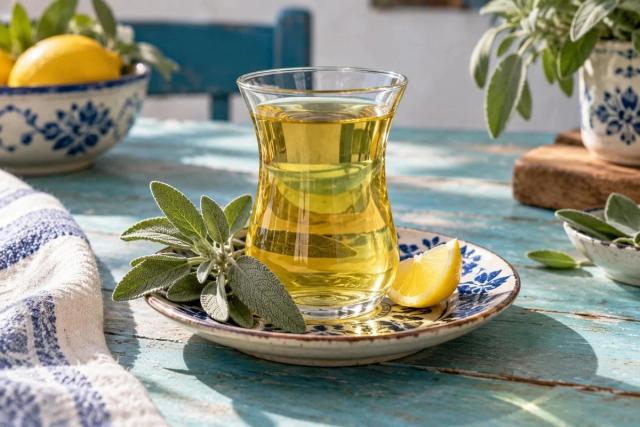
Sage Tea
A light sage-leaf infusion with optional lemon and honey.
The Turkish pantry
A liquid or crystallized sweetener whose floral character and texture vary by product.
Last updated:
This guide concerns plain honey. A honey-flavored syrup or a mixture with added ingredients is a different product. Color and a scenic label alone do not verify floral source, origin or purity.
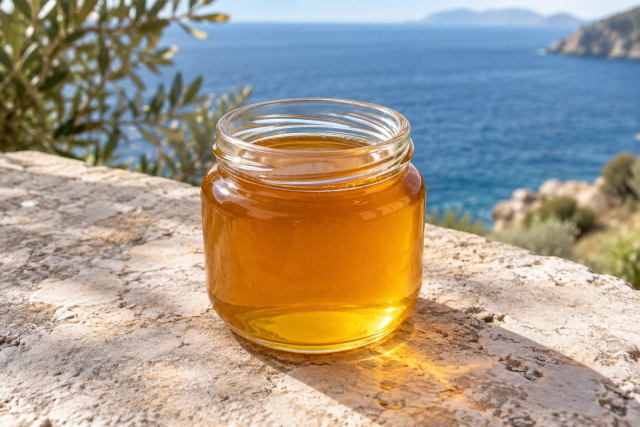
Pourable honey, shown in the guide picture.
Honey can form sugar crystals during storage; crystallization alone does not establish spoilage.
Wax-containing comb and formulated syrups have different edible portions or ingredients.
Dry sugar changes the liquid balance; use a recipe designed for the substitution.
It has a different flavor and composition. Use it only as an intentional variation where the recipe allows.
Honey [1]
| Nutrient | Amount |
|---|---|
| Energy | 304 kcal |
| Protein | 0.3 g |
| Total fat | 0 g |
| Saturated fat | 0 g |
| Carbohydrate | 82.4 g |
| Dietary fiber | 0.2 g |
| Total sugars | 82.1 g |
| Sodium | 4 mg |
| Cholesterol | 0 mg |
| Calcium | 6 mg |
| Iron | 0.42 mg |
| Potassium | 52 mg |
| Vitamin D | 0 µg |
Plain honey per 100 g; a generic reference rather than an analysis of a named floral variety or brand. Values are rounded for readability; “not reported” does not mean zero. A “<” value is below the source’s measurement limit.
Nutrition values come from the reference source named above. They are published reference values, not our own measurements. Actual products and cooking methods may change the values.
Bal can be served as a sweetener or paired with other breakfast foods. This guide describes honey itself; the nutrition of a serving with cream, bread or nuts depends on those added ingredients.
A light sage-leaf infusion with optional lemon and honey.
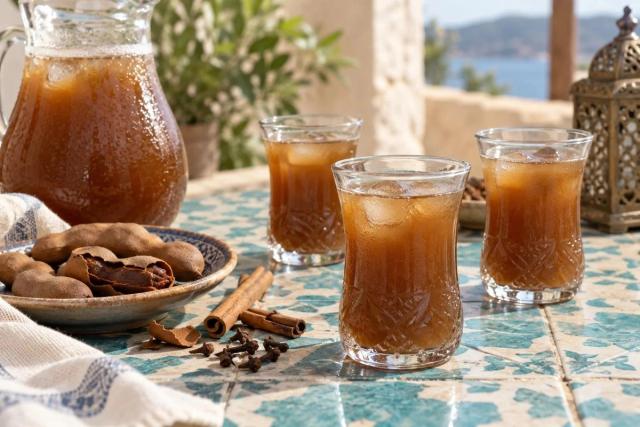
A tangy chilled tamarind drink scented with cinnamon, cloves and fresh ginger.
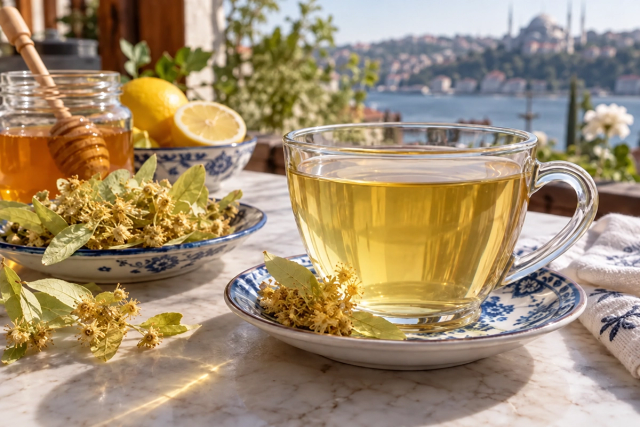
A delicate linden-blossom infusion, strained and served warm with optional honey and lemon.