


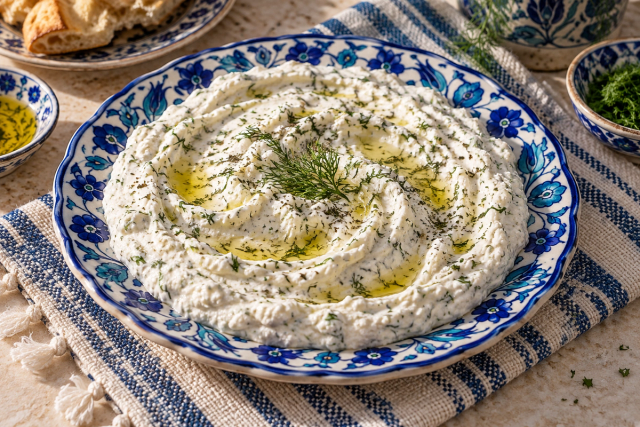
Thick Yogurt and Herb Meze
A spoonable strained-yogurt meze with white cheese, mint, dill and garlic.
The Turkish pantry
The leaves and tender stems of dill are the fresh herb covered here.
Last updated:
Fresh dill leaves and tender stems, not dill seed or fennel fronds.
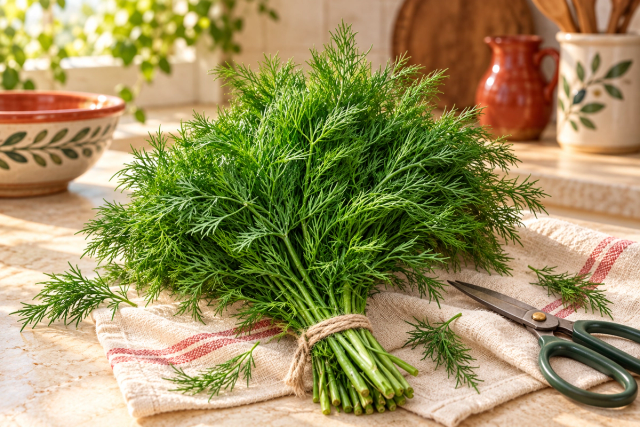
Fine green feathery foliage used chopped.
A different part of the plant with a different cooking use.
It changes the texture and strength; do not replace a large handful with an equal volume of dried herb.
Dill weed, fresh [1]
| Nutrient | Amount |
|---|---|
| Energy | 43 kcal |
| Protein | 3.46 g |
| Total fat | 1.12 g |
| Saturated fat | 0.06 g |
| Carbohydrate | 7.02 g |
| Dietary fiber | 2.1 g |
| Total sugars | Not reported |
| Sodium | 61 mg |
| Cholesterol | 0 mg |
| Calcium | 208 mg |
| Iron | 6.59 mg |
| Potassium | 738 mg |
| Vitamin D | 0 µg |
Fresh dill foliage, not dried dill or dill seed. Values are rounded for readability; “not reported” does not mean zero. A “<” value is below the source’s measurement limit.
Nutrition values come from the reference source named above. They are published reference values, not our own measurements. Actual products and cooking methods may change the values.
Fresh dill flavors our haydari and zucchini fritters, where it contributes to the mixture rather than serving only as decoration.
A spoonable strained-yogurt meze with white cheese, mint, dill and garlic.
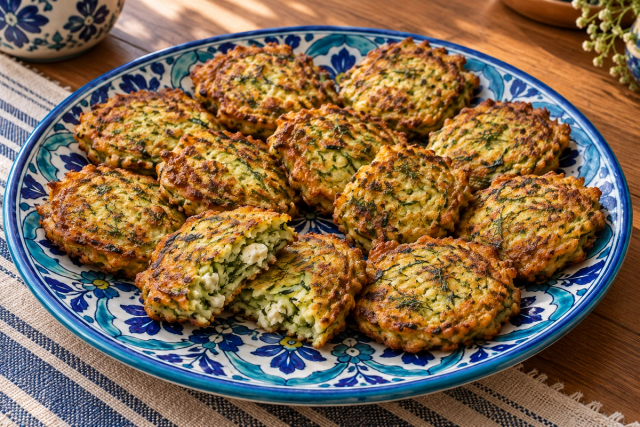
Kabak mücveri turns grated zucchini, white cheese and dill into small, golden pan-fried fritters.
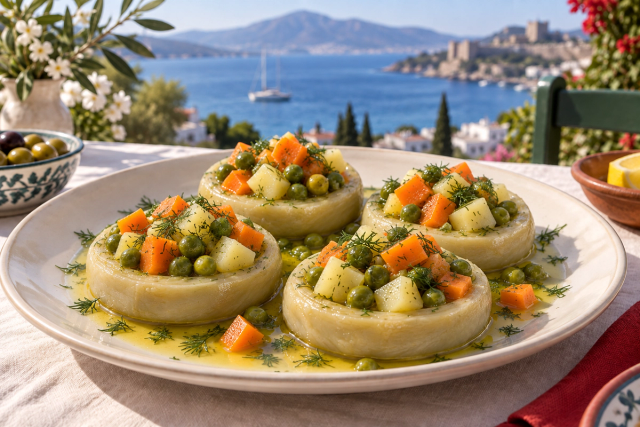
Tender artichoke bottoms filled with carrot, potato and peas in lemon and olive oil.
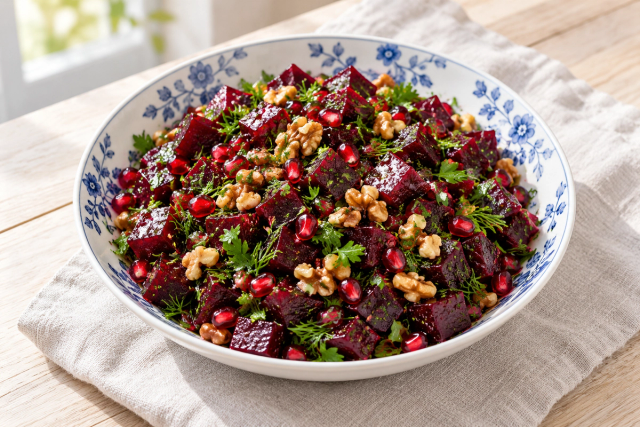
Tender beets with dill, parsley, walnuts and pomegranate in a lemon and olive oil dressing.
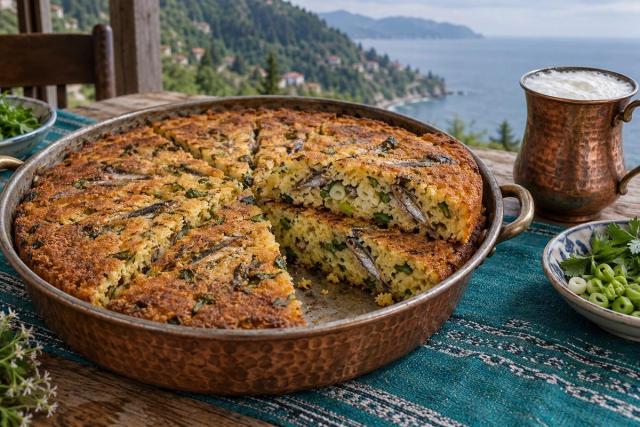
Dense savory cornmeal bread filled with anchovies, chard, spring onions and herbs.
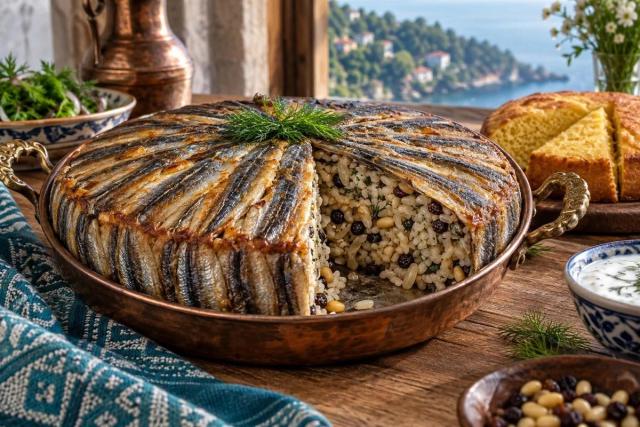
Spiced rice with currants, pine nuts and dill enclosed in a browned anchovy shell.
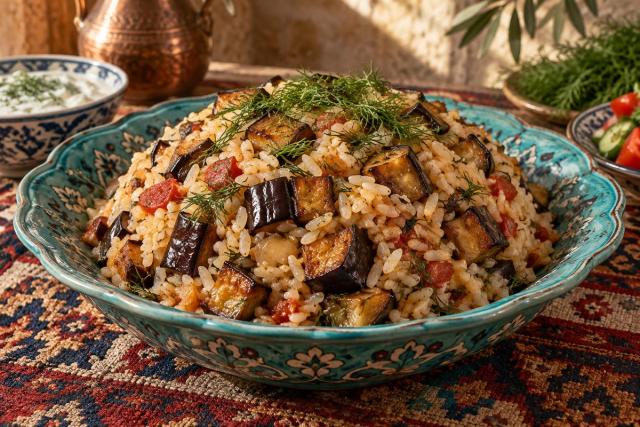
Tender Baldo rice with browned eggplant, tomato, onion, butter and fresh dill.
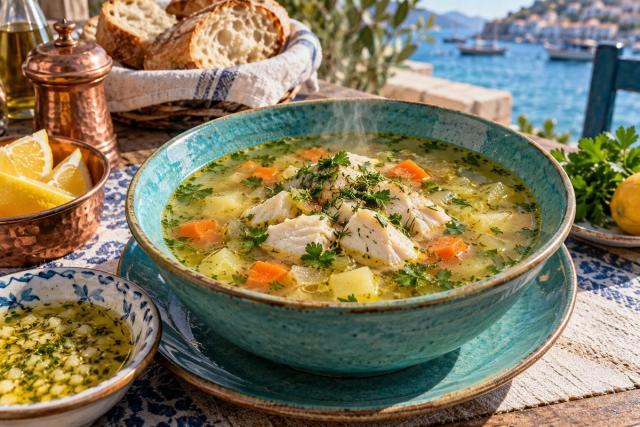
A clear fish broth with tender sea bass, potato, carrot and fresh herbs.
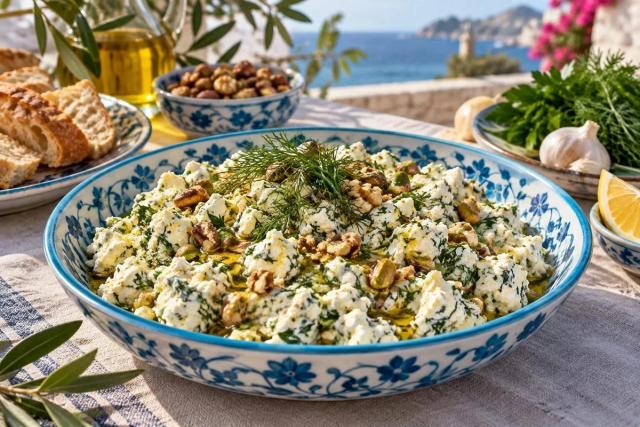
A textured white-cheese meze with strained yogurt, walnuts, pistachios and fresh herbs.
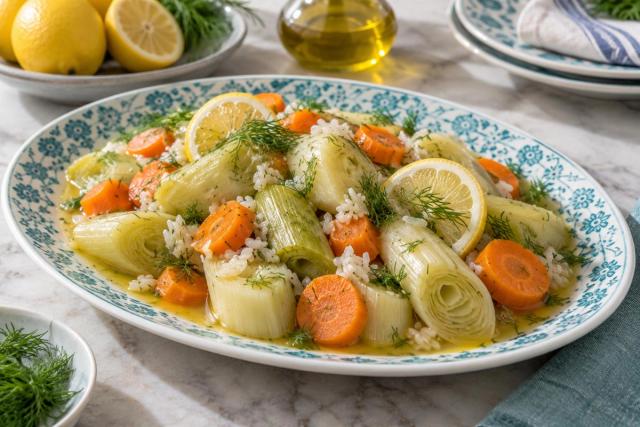
Tender leek pieces, carrot and rice in a gentle lemon and olive-oil cooking liquid.
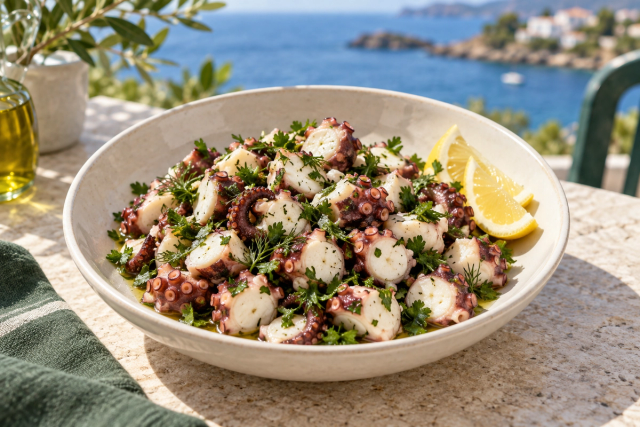
Tender octopus pieces tossed with lemon, olive oil, parsley and dill for a bright, chilled seafood salad.
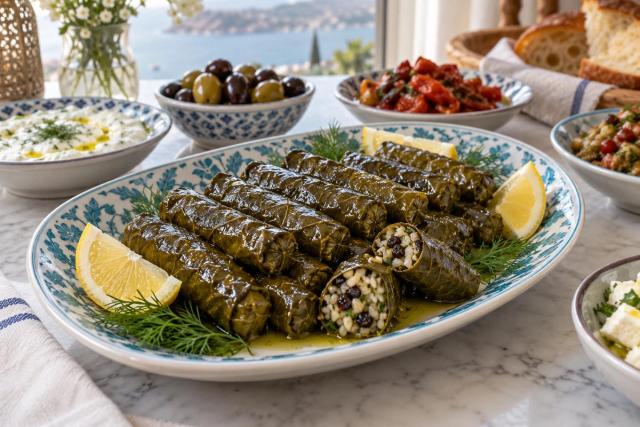
Tender vine leaves wrapped around fragrant rice with onion, herbs and warm spices.