


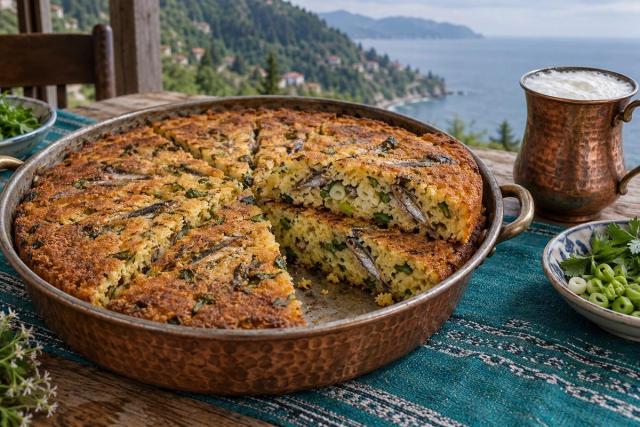
Black Sea Anchovy Cornbread
Dense savory cornmeal bread filled with anchovies, chard, spring onions and herbs.
The Turkish pantry
Broad green leaves with tender ribs for chopped greens, soups and savory baking. Trim tough stalks and match the cut to the recipe.
Last updated:
Fresh chard leaves, including their tender ribs, are the subject here. Trim away tough stalks and damaged leaves. Chard is distinct from spinach and beet greens; different stalk colors do not make every bunch a separately analyzed ingredient.
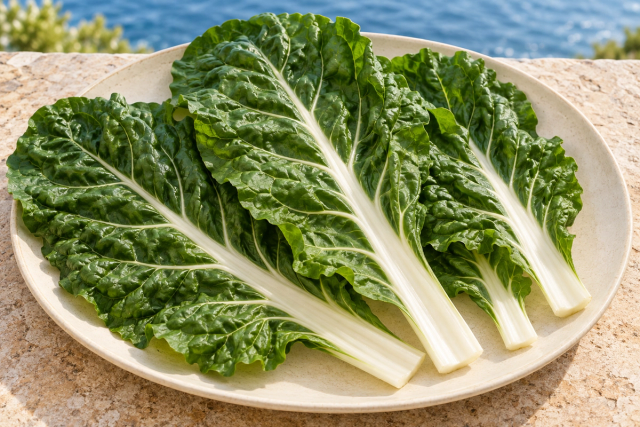
Broad green leaf blades with edible tender ribs; remove tough stalks and damaged areas before preparing the recipe quantity.
The stalks are edible but take longer to cook than the leaves. A stalk-heavy bunch is not the same prepared quantity as trimmed leaves.
Processing and water content change its handling and weight. The nutrition reference here is raw, not boiled or frozen.
It can serve a similar leafy role, but changes flavor, texture and moisture. Adjust preparation to the dish rather than assuming identical behavior.
A possible buying alternative for the same leaf preparation; trim tough stalks consistently. This is not a claim of measured nutrition equality between cultivars.
Chard, swiss, raw [1]
| Nutrient | Amount |
|---|---|
| Energy | 19 kcal |
| Protein | 1.8 g |
| Total fat | 0.2 g |
| Saturated fat | 0.03 g |
| Carbohydrate | 3.74 g |
| Dietary fiber | 1.6 g |
| Total sugars | 1.1 g |
| Sodium | 213 mg |
| Cholesterol | 0 mg |
| Calcium | 51 mg |
| Iron | 1.8 mg |
| Potassium | 379 mg |
| Vitamin D | 0 µg |
Raw edible Swiss chard, with tough stems and damaged leaves excluded according to USDA NDB11147. Tender ribs may remain; this is not a separate blade-only analysis or a cultivar-specific record. Cooked or frozen chard needs its own reference. Values are rounded for readability; “not reported” does not mean zero. A “<” value is below the source’s measurement limit.
Nutrition values come from the reference source named above. They are published reference values, not our own measurements. Actual products and cooking methods may change the values.
The linked Hamsikoli uses finely chopped chard leaves with anchovy, cornmeal and other greens. This is a documented use in our recipe collection, not a claim that chard belongs exclusively to one region.
Dense savory cornmeal bread filled with anchovies, chard, spring onions and herbs.
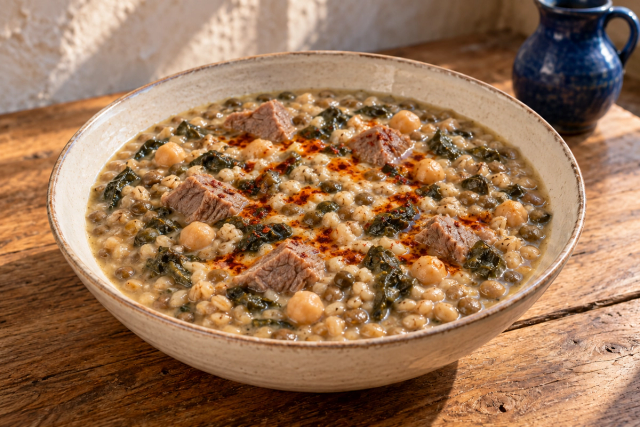
A Van-style pressure-cooker stew of lamb, green lentils, wheat, cooked chickpeas and chard, finished with strained yogurt, garlic and red pepper butter.