


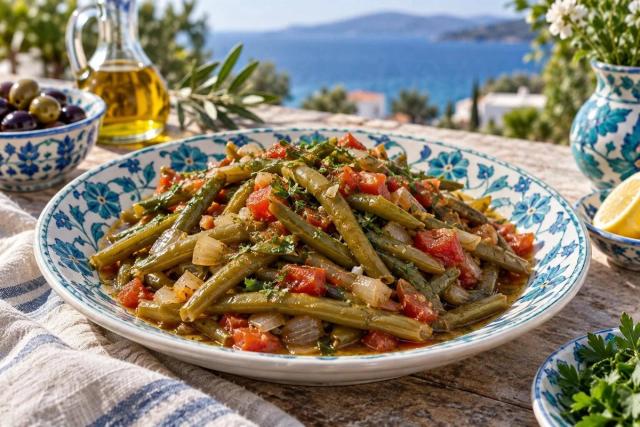
Fresh Cowpeas in Olive Oil
Fresh cowpea pods gently braised with tomato, garlic and olive oil.
The Turkish pantry
Tender green cowpea pods are cooked whole or in short lengths, with the young seeds still inside. Choose supple pods before the seeds become large and the pod walls tough.
Last updated:
Fresh young cowpea pods with their immature seeds. These are not dried black-eyed peas or shelled mature cowpeas; the whole tender pod is used.
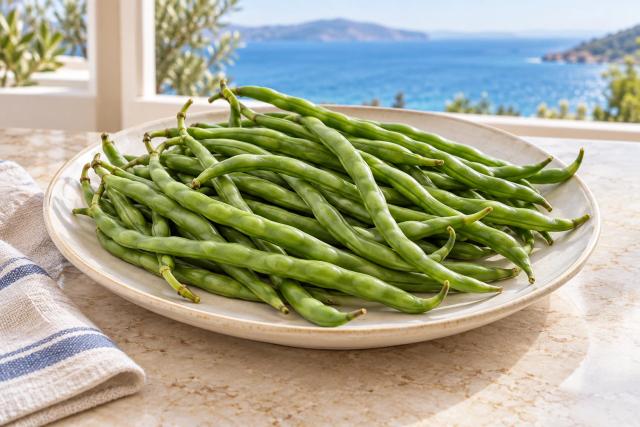
Trim the ends and any strings, then leave whole or cut to suit the pan.
Only the seeds are used in these forms; they need different preparation and do not replace tender pods by weight.
Can suit a similar braise if the recipe permits, but flavor, seed size and cooking time differ.
Require their own soaking and cooking method; they are not a direct substitute for fresh pods.
Raw young cowpea pods with seeds [1]
| Nutrient | Amount |
|---|---|
| Energy | 44 kcal |
| Protein | 3.3 g |
| Total fat | 0.3 g |
| Saturated fat | 0.08 g |
| Carbohydrate | 9.5 g |
| Dietary fiber | 3.3 g |
| Total sugars | 5.04 g |
| Sodium | 4 mg |
| Cholesterol | 0 mg |
| Calcium | 65 mg |
| Iron | 1 mg |
| Potassium | 215 mg |
| Vitamin D | 0 µg |
USDA reference per 100 g of raw tender pods with young seeds. Not dried or shelled mature cowpeas or an olive-oil braise. Values are rounded for readability; “not reported” does not mean zero. A “<” value is below the source’s measurement limit.
Nutrition values come from the reference source named above. They are published reference values, not our own measurements. Actual products and cooking methods may change the values.
Zeytinyağlı Taze Börülce uses the tender pods in an olive-oil vegetable dish. Keeping some length in the pieces lets the pods remain recognizable after gentle cooking.
Fresh cowpea pods gently braised with tomato, garlic and olive oil.