


Semolina Halva
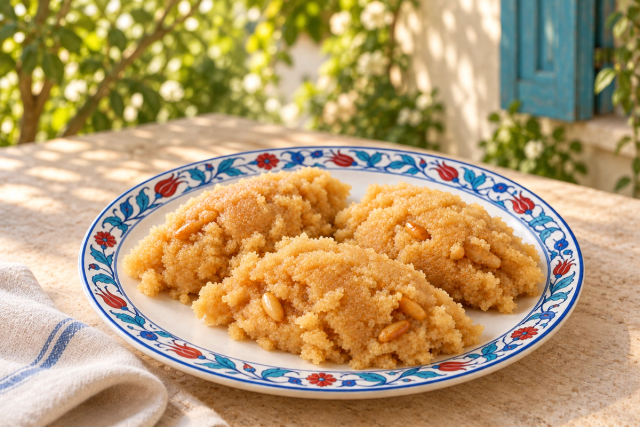
Golden toasted semolina and pine nuts, finished with sweetened milk and shaped while warm.
The Turkish pantry
Golden durum-wheat grains used for the distinct, granular texture of semolina halva.
Last updated:
Coarse semolina is a granular product milled from durum wheat. This guide covers the loose grains used for irmik helvası, rather than the fine, powdery grind used in other preparations.
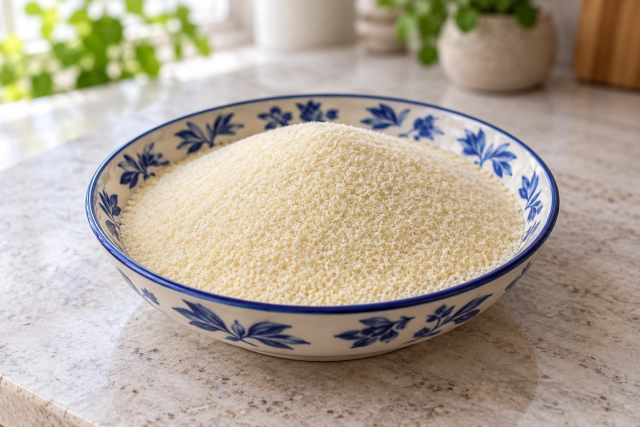
Coarse and medium-coarse grades retain a visible grain texture. Choose the coarse grade specified by the helva recipe.
Finely milled semolina has a different texture. Some manufacturers call both coarse and fine products semolina flour, so the product name alone does not identify the grind.
Not a direct replacement in this helva: the finer grind absorbs liquid differently and gives a smoother, denser texture. Use the grind the recipe specifies.
Not a replacement here: flour has no separate grains and gives the different texture of flour halva, which has its own recipe.
Semolina, coarse and semi-coarse, dry [1]
| Nutrient | Amount |
|---|---|
| Energy | 365 kcal |
| Protein | 11.73 g |
| Total fat | 1.6 g |
| Saturated fat | Not reported |
| Carbohydrate | 73.82 g |
| Dietary fiber | 3.22 g |
| Total sugars | Not reported |
| Sodium | 0 mg |
| Cholesterol | Not reported |
| Calcium | 17.16 mg |
| Iron | 1.55 mg |
| Potassium | 173.8 mg |
| Vitamin D | Not reported |
USDA Foundation reference for dry coarse and semi-coarse semolina, per 100 g. These values describe the dry grains, not finished helva, which adds butter, sugar and liquid. Vitamin and mineral values varied widely between the sampled products and differ by brand, including whether a product is enriched. Values are rounded for readability; “not reported” does not mean zero. A “<” value is below the source’s measurement limit.
Nutrition values come from the reference source named above. They are published reference values, not our own measurements. Actual products and cooking methods may change the values.
In Turkish cooking, irmik is used in semolina helva and other sweets. The grind should suit the particular recipe; a grade intended for a smooth pudding is different from the coarse grains chosen for this helva.
Golden toasted semolina and pine nuts, finished with sweetened milk and shaped while warm.