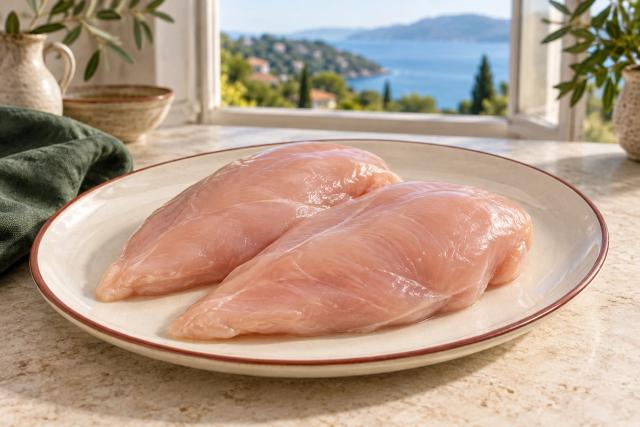
Boneless, skinless breast meat for sliced pieces, gentle poaching and shredded chicken. Match the thickness to the method and check the center with a thermometer.
Last updated:
Raw chicken breast meat with the skin and bones removed. This exact ingredient is separate from thigh meat, wings, bone-in breasts and cooked chicken. The nutrition reference describes plain raw meat, not a marinated product or the finished dish.
Types & forms
Whole breast fillets
The thick end and tapered tip can cook at different rates. Follow the recipe’s cutting or flattening instructions before cooking.
Slices, cubes or shredded meat
Slice or cube the raw fillet as the recipe specifies. For shredded chicken, cook safely first, then pull apart with clean utensils.
Bone-in, skin-on or marinated breast · comparison
These differ in edible yield, seasoning and cooking behavior. They are not the same prepared ingredient as plain boneless, skinless meat.
What to look for when buying
Choose a cold, intact pack without leaks and keep it separate from ready-to-eat food. Pick up chicken near the end of shopping and refrigerate it promptly at home.
Check the cut, skin and bone information rather than relying on the word chicken. Read the ingredients for added water, salt or marinade; these products can differ from plain meat in seasoning and nutrition.
Follow the use-by date and storage instructions. Buy only what you can cook within 1–2 days or freeze promptly; a later printed date does not replace careful cold storage.
Prepare & cook
Do not wash raw chicken. Keep its juices away from salad and cooked food; wash hands, knives and boards after handling it. Marinate in a covered container in the refrigerator, and reserve a clean portion of sauce before it touches raw meat.
Cut pieces to a similar thickness for the chosen recipe. In a poached-and-shredded preparation, use a gentle simmer and check temperature rather than keeping the meat at a hard boil after it is cooked.
Cook the thickest part to at least 165°F, measured with a food thermometer. Insert the probe from the side of a thin piece so its sensing area reaches the center. Color, clear juices and elapsed time alone do not establish safety.
Store it well
Keep raw chicken in a leak-proof container in a refrigerator at 40°F or below, separate from ready-to-eat food. Cook within 1–2 days or freeze at 0°F or below. Follow an earlier use-by date if the pack specifies one.
Thaw in the refrigerator in a container that catches drips. For cold-water thawing, use a sealed leak-proof bag, change the water every 30 minutes and cook immediately. Cook immediately after microwave thawing too; never thaw on the counter.
Refrigerate cooked chicken in shallow containers within 2 hours, or within 1 hour if the room or outdoor temperature is above 90°F. Do not leave a large warm pot out to cool for hours.
Use refrigerated cooked chicken within 3–4 days, or freeze it. Reheat leftovers to 165°F throughout. Keep raw and cooked portions labeled separately.
Substitutions depend on the dish
Boneless, skinless thigh meat
Thigh gives a different texture and may need a different cooking time. Use only where the recipe allows it and check its own internal temperature.
Bone-in breast or ready-cooked chicken
Do not substitute by piece count or keep the same timing. Bone changes edible yield; cooked meat needs a method designed for reheating rather than raw cooking.
USDA reference per 100 g of raw breast meat, without skin or bone. Cooking changes water and fat content; these are not values for 100 g of cooked chicken or a finished dish. Check product labels for added salt or solution. Values are rounded for readability; “not reported” does not mean zero. A “<” value is below the source’s measurement limit.
Nutrition values come from the reference source named above. They are published reference values, not our own measurements. Actual products and cooking methods may change the values.
At the Turkish table
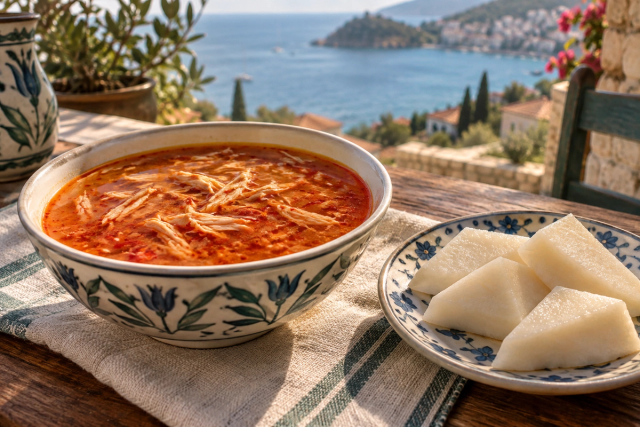
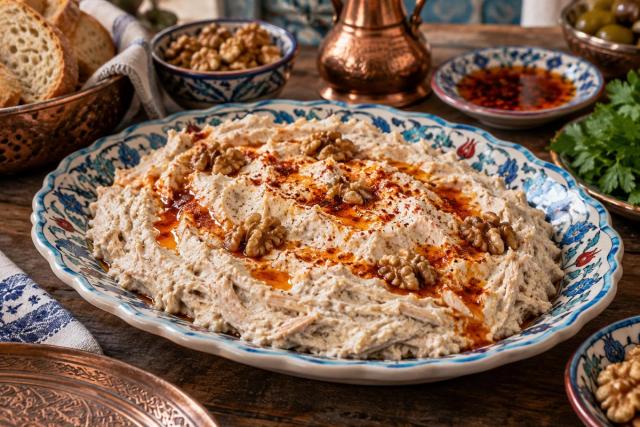
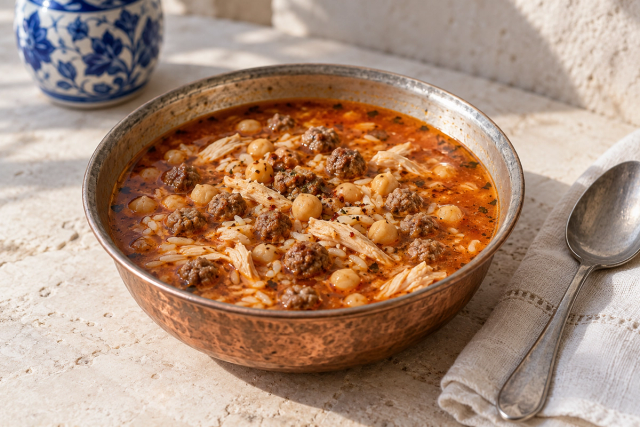
In this collection, breast meat is used in Arabaşı Çorbası and Çerkez Tavuğu. Cooked shreds distribute through soup or a walnut sauce; the linked recipes provide the seasoning and serving method.
Spicy chicken soup served with a separate plate of cool, softly set flour dough. Arabaşı belongs to several Central Anatolian food traditions. Serve small bites of the soft dough with the soup and chew normally; there is no need to swallow dough whole.