


Turkish Tea
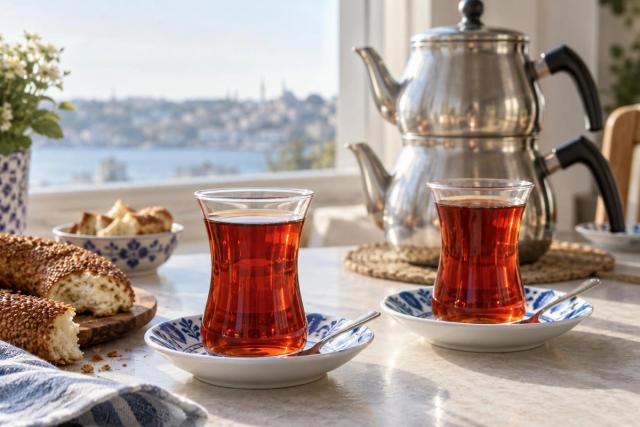
Loose black tea brewed in a double teapot and diluted to taste in small glasses.
The Turkish pantry
Loose black tea is the dry leaf used to make Turkish çay. Brew a concentrated infusion in the upper pot, then adjust each glass with hot water as the recipe directs.
Last updated:
Loose dry black tea leaves. The leaves are distinct from brewed tea, instant tea powder, herbal infusions and sweetened ready-to-drink tea.
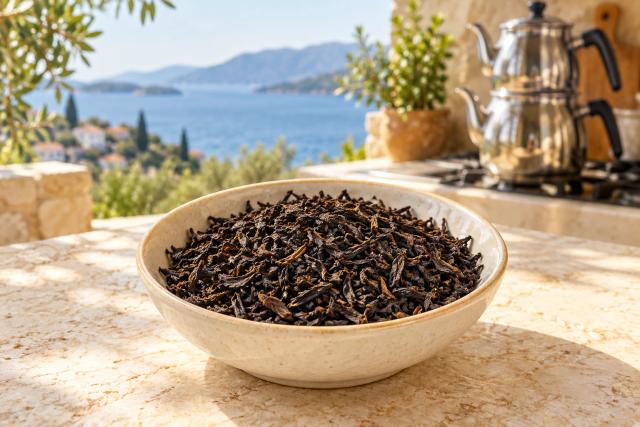
The dry leaf ingredient for the linked çaydanlık method; leaf size and blend affect extraction.
A different format; use its own instructions rather than substituting one bag for an assumed spoonful.
Can be brewed deliberately with adjusted timing and strength; aroma and extraction may differ.
Different products and brewing methods, not equivalents for this black-tea recipe.
No verified nutrition data is available for this ingredient.
UNESCO’s shared tea-culture listing concerns hospitality and social life in Azerbaijan and Türkiye. Here, the linked recipe uses the Turkish two-pot method; it does not imply that every tea culture uses identical equipment.
Loose black tea brewed in a double teapot and diluted to taste in small glasses.