


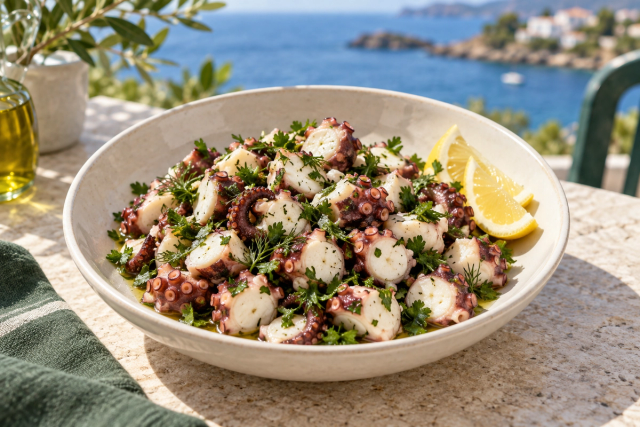
Octopus Salad
Tender octopus pieces tossed with lemon, olive oil, parsley and dill for a bright, chilled seafood salad.
The Turkish pantry
Whole dried culinary leaves that flavor a simmering dish and are removed before serving.
Last updated:
This guide concerns dried culinary bay leaves, Laurus nobilis. Other plants with laurel or bay in their common name are not automatically the same edible ingredient. Buy a food product rather than identifying an ornamental leaf by appearance.
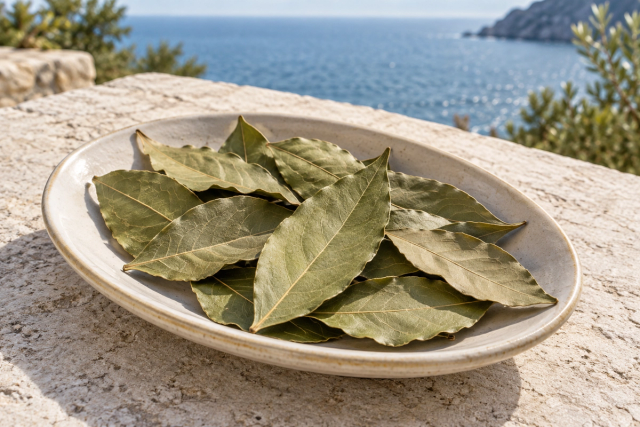
The form used here, easy to count and retrieve from a pot.
Powder disperses through the food and cannot be removed like a whole leaf.
A different moisture content and intensity; use the form requested by the recipe.
For a recipe where it supplies background aroma, omission changes flavor less than using an unidentified leaf.
Use only a method designed for ground bay; an automatic leaf-to-spoon conversion changes both flavor and texture.
Spices, bay leaf [1]
| Nutrient | Amount |
|---|---|
| Energy | 313 kcal |
| Protein | 7.61 g |
| Total fat | 8.36 g |
| Saturated fat | 2.28 g |
| Carbohydrate | 75 g |
| Dietary fiber | 26.3 g |
| Total sugars | Not reported |
| Sodium | 23 mg |
| Cholesterol | 0 mg |
| Calcium | 834 mg |
| Iron | 43 mg |
| Potassium | 529 mg |
| Vitamin D | 0 µg |
Dried bay leaf as an ingredient, per 100 g. Whole leaves are removed before serving; these values are not an analysis of the infusion or finished dish. Values are rounded for readability; “not reported” does not mean zero. A “<” value is below the source’s measurement limit.
Nutrition values come from the reference source named above. They are published reference values, not our own measurements. Actual products and cooking methods may change the values.
Defne contributes background aroma to stocks and braises in this collection. The nutrition reference describes the dry ingredient itself, not nutrients transferred into a broth after the leaves are removed.
Tender octopus pieces tossed with lemon, olive oil, parsley and dill for a bright, chilled seafood salad.
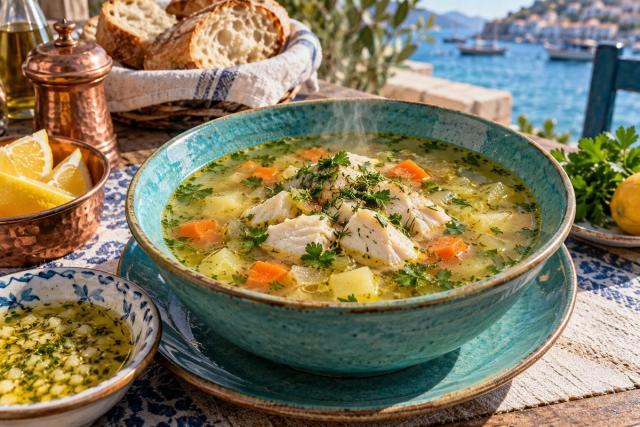
A clear fish broth with tender sea bass, potato, carrot and fresh herbs.
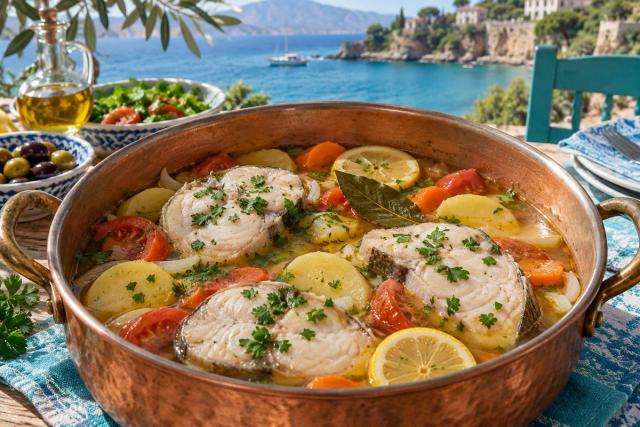
Thick grouper steaks gently cooked over potatoes, carrots, tomato and lemon.
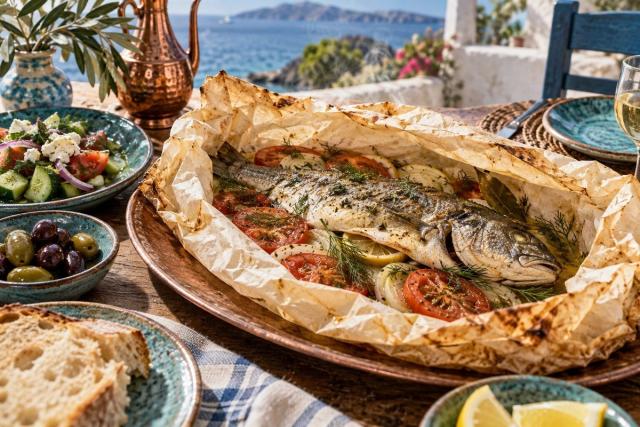
Whole sea bass baked in a parchment parcel with tomato, onion, lemon and dill.
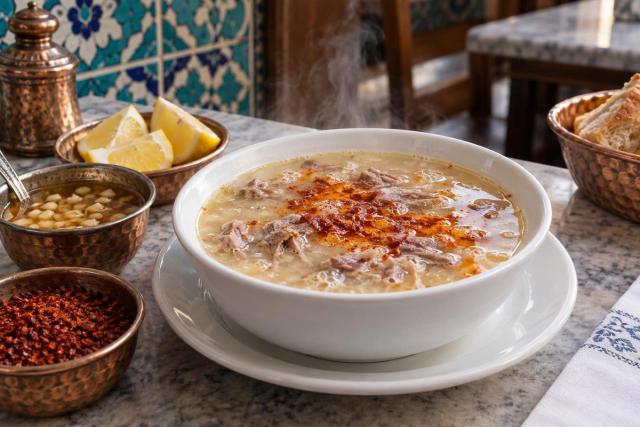
Slow-simmered lamb head meat and trotters in a rich broth, with garlic vinegar and pepper butter.
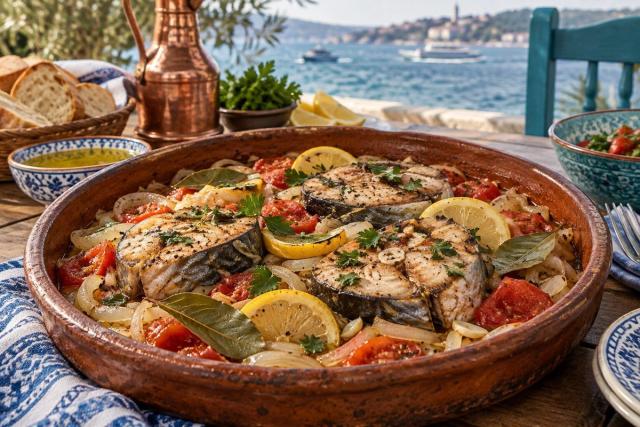
Atlantic bonito steaks baked over soft onions and tomatoes with bay and lemon.