


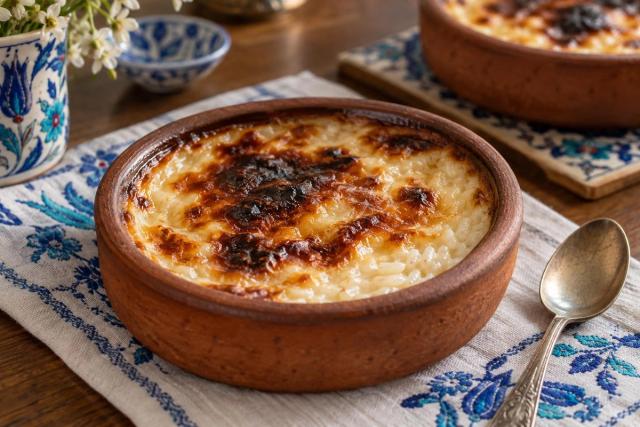
Baked Rice Pudding
Creamy milk-and-rice pudding with an unevenly browned top, chilled in individual oven-safe bowls.
The Turkish pantry
Plain whole milk supplies liquid and dairy richness; read the fat, fortification and storage information on the carton.
Last updated:
This guide concerns plain, pasteurized whole cow milk. It does not cover raw milk, goat or sheep milk, cream, sweetened condensed milk or plant-based drinks. Homogenization concerns fat distribution; pasteurization is the heat treatment used for safety. Neither property can be verified from a picture of white liquid.
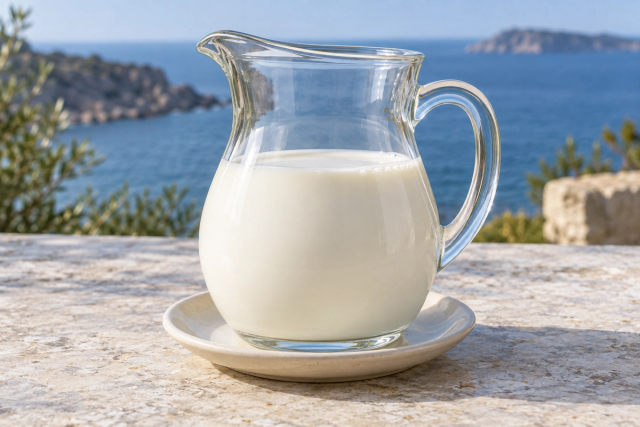
Keep refrigerated; check the labeled fat percentage and use-by guidance.
An unopened shelf-stable carton and a chilled carton can have different storage instructions. Refrigerate after opening as directed.
Different fat, water or sugar content; do not assume the same result in a pudding or dough.
It may give a lighter result. Follow a recipe that permits it rather than compensating with an invented amount of cream.
Flavor, protein, sweetness and thickening behavior differ. Use a recipe developed for that drink when the result depends on dairy.
Milk, whole, 3.25% milkfat, without added vitamin A and vitamin D [1]
| Nutrient | Amount |
|---|---|
| Energy | 61 kcal |
| Protein | 3.15 g |
| Total fat | 3.27 g |
| Saturated fat | 1.86 g |
| Carbohydrate | 4.78 g |
| Dietary fiber | 0 g |
| Total sugars | 5.05 g |
| Sodium | 43 mg |
| Cholesterol | 10 mg |
| Calcium | 113 mg |
| Iron | 0.03 mg |
| Potassium | 132 mg |
| Vitamin D | 0.1 µg |
Reference whole cow milk at 3.25% milk fat, without added vitamins A or D. Actual whole-milk fat and fortification vary by product. The separately labeled comparison contains added vitamin D; do not combine the two records. Values are rounded for readability; “not reported” does not mean zero. A “<” value is below the source’s measurement limit.
Nutrition values come from the reference source named above. They are published reference values, not our own measurements. Actual products and cooking methods may change the values.
The linked milk-based recipes use the whole cow-milk identity stored in this collection. Their finished nutrition also depends on rice, starch, sugar and other additions; the milk reference table describes milk alone.
Creamy milk-and-rice pudding with an unevenly browned top, chilled in individual oven-safe bowls.
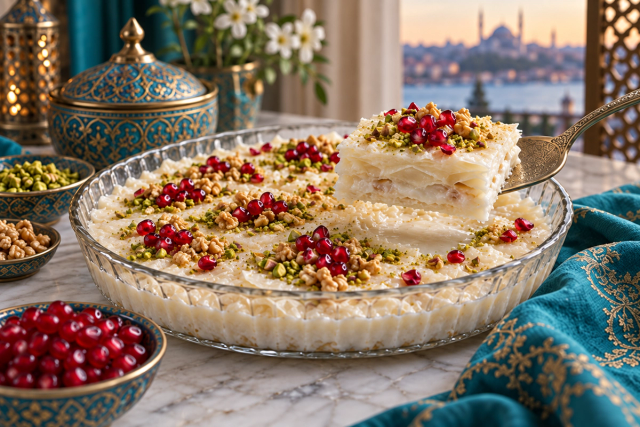
Delicate starch sheets soaked in sweet milk, layered with walnuts and finished with pistachios and pomegranate.
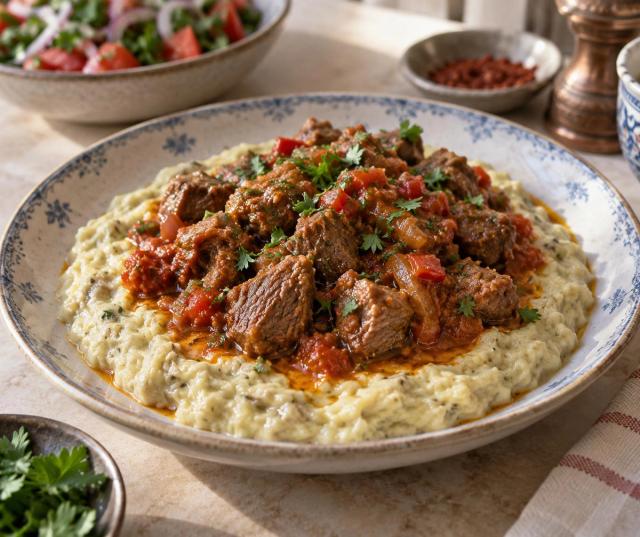
Tender lamb in tomato sauce over a smoky eggplant purée enriched with milk and kaşar.

Warm milk gently thickened with salep and finished with cinnamon.
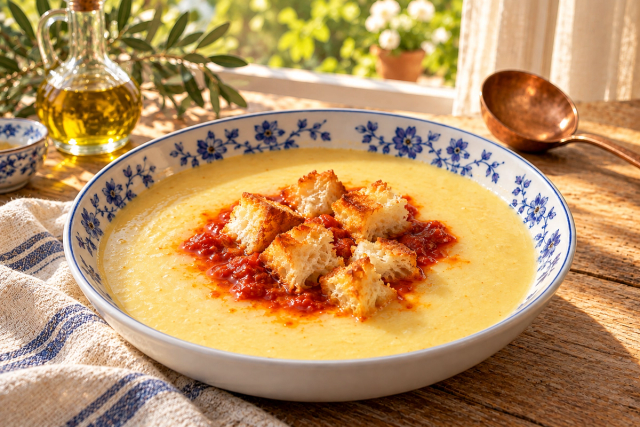
A smooth cornmeal and milk soup served with tomato-paste sauce and butter-toasted bread cubes.
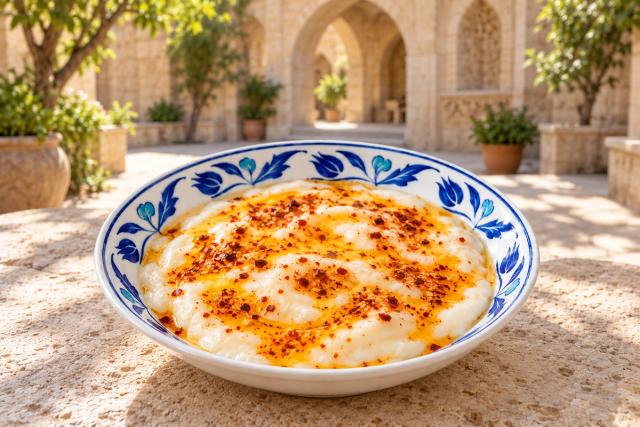
Aksaray’s savory dolaz: milk thickened with flour to a smooth, pudding-like consistency, salted and finished with butter melted with pul biber. Unlike the sweet dolaz made elsewhere in Central Anatolia, it has no sugar or molasses.
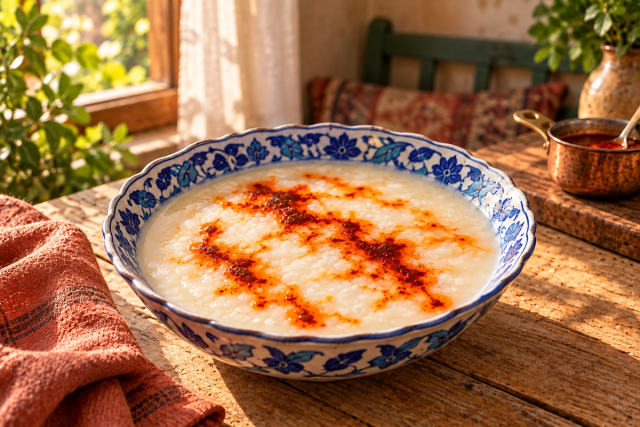
Rice simmered in milk, thickened with an egg-yolk mixture and finished with red-pepper butter.
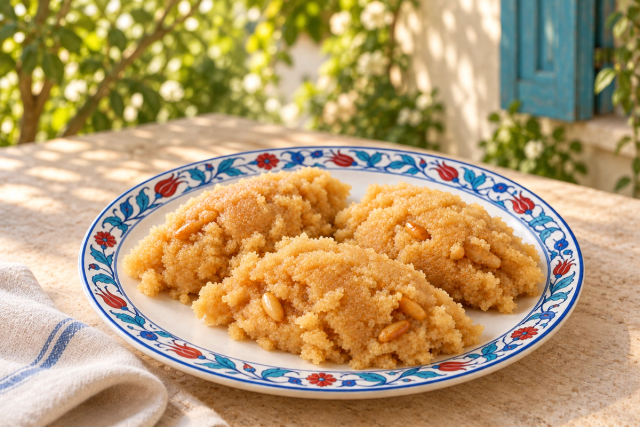
Golden toasted semolina and pine nuts, finished with sweetened milk and shaped while warm.