


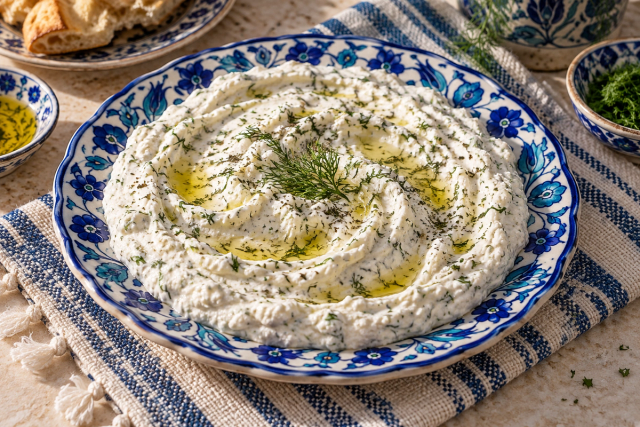
Thick Yogurt and Herb Meze
A spoonable strained-yogurt meze with white cheese, mint, dill and garlic.
The Turkish pantry
Thick, tangy yogurt for dips and spoonable sauces. Check the milk source, fat level and added salt rather than relying on thickness alone.
Last updated:
This is an overview of plain strained dairy yogurt. Straining removes part of the liquid whey and makes a thicker product. The recipe identity specifies neither milk animal nor fat percentage. It is not a claim that every product called Greek-style yogurt has identical ingredients or nutrition.
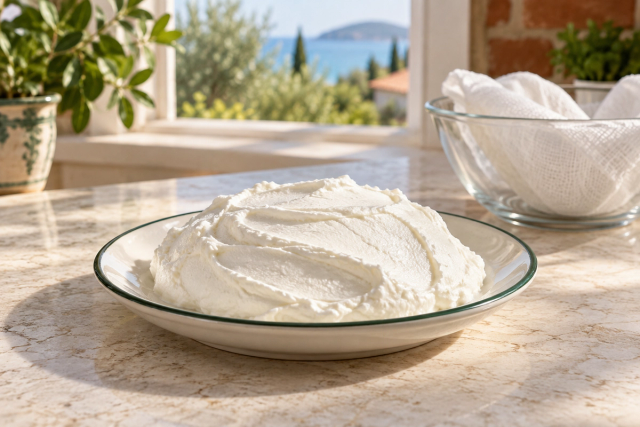
A thicker yogurt that holds soft spread marks. Milk source, fat level and degree of straining can differ.
Read the ingredients and label: the name alone does not establish milk source, fat level or a single production method.
Labneh may contain salt; unstrained yogurt is looser. Check the actual product before substituting.
A milk-specific version of strained yogurt. Whole-milk, low-fat and nonfat products have different composition; thickness alone identifies neither milk source nor fat level.
Match milk source and fat level where specified. Taste and texture may differ, so follow the recipe’s consistency cues.
Check for added salt and a firmer texture. Adjust only where the recipe permits; it is not automatically the same ingredient.
Example: plain whole cow’s-milk Greek-style strained yogurt [1]
| Nutrient | Amount |
|---|---|
| Energy | 97 kcal |
| Protein | 9 g |
| Total fat | 5 g |
| Saturated fat | 2.4 g |
| Carbohydrate | 3.98 g |
| Dietary fiber | 0 g |
| Total sugars | 4 g |
| Sodium | 35 mg |
| Cholesterol | 13 mg |
| Calcium | 100 mg |
| Iron | 0 mg |
| Potassium | 141 mg |
| Vitamin D | 0 µg |
This USDA record is one whole-milk cow’s yogurt example. It does not represent all strained yogurts, fat levels or milk sources, or assign a milk source to the recipe. Check the product label. Values are rounded for readability; “not reported” does not mean zero. A “<” value is below the source’s measurement limit.
Nutrition values come from the reference source named above. They are published reference values, not our own measurements. Actual products and cooking methods may change the values.
Süzme yoğurt describes the strained form, not one animal’s milk or one region. The linked recipes show uses of this ingredient without assigning every version the same composition.
A spoonable strained-yogurt meze with white cheese, mint, dill and garlic.
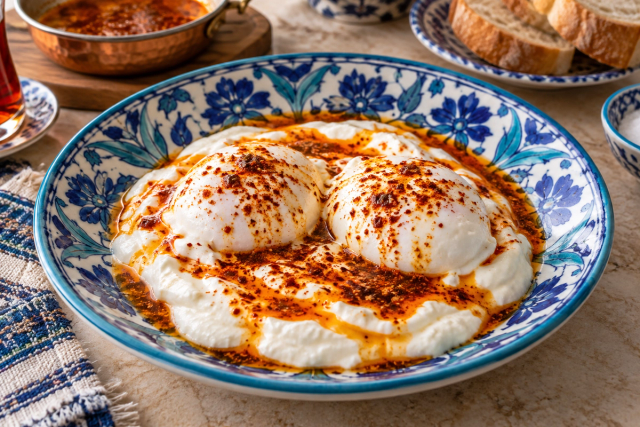
Çılbır pairs warm poached eggs with thick garlic yogurt and a red-pepper butter drizzle.
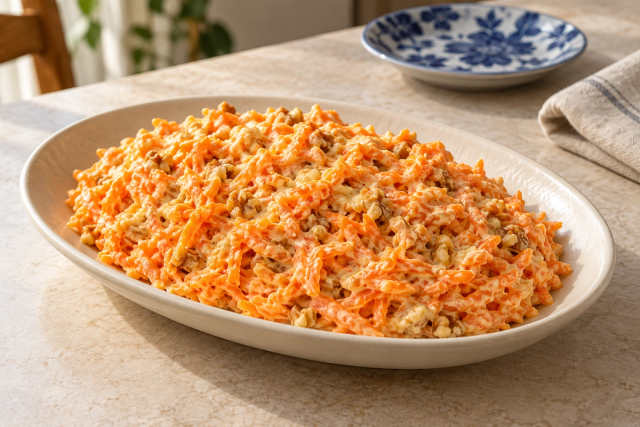
Soft grated carrots, garlic yogurt and walnuts make a creamy meze with a gentle sweetness.
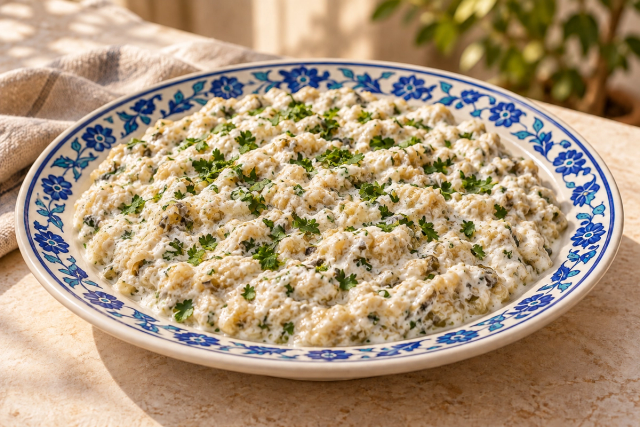
Flame-charred eggplant folded into garlic yogurt with lemon and olive oil, finished with parsley.
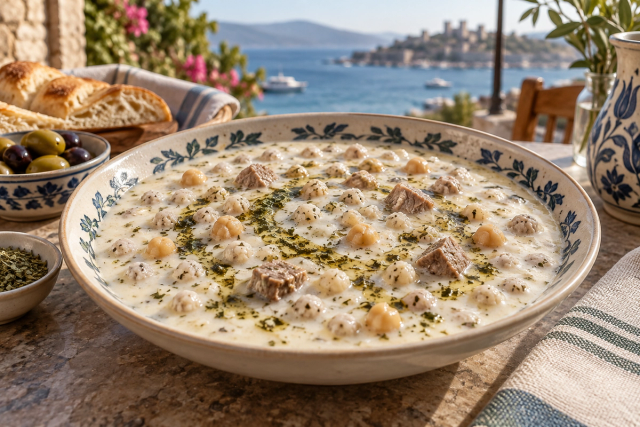
Tiny rice-and-lamb balls, chickpeas and tender lamb in a yogurt broth finished with mint butter. Gaziantep yuvalama is a substantial celebratory dish, often described locally as a meal rather than an everyday soup. This home adaptation uses rice flour for the small balls; traditional preparations may grind soaked rice with meat.
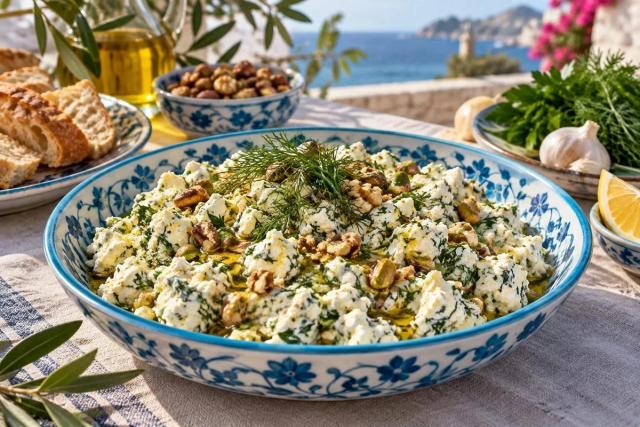
A textured white-cheese meze with strained yogurt, walnuts, pistachios and fresh herbs.
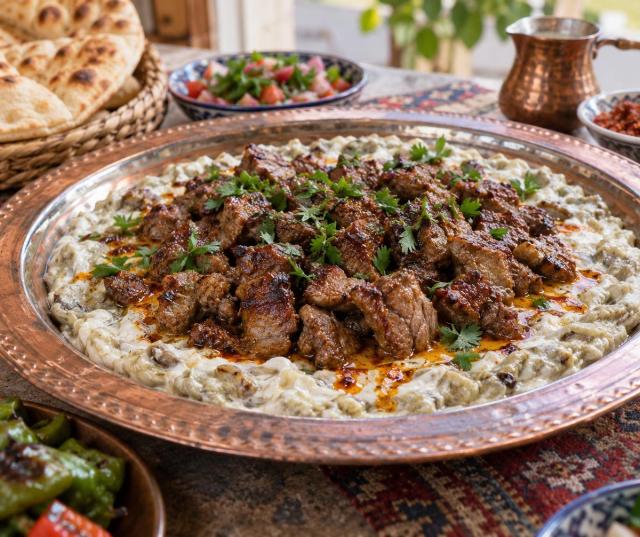
Hot lamb and pepper butter over smoky eggplant folded into garlic yogurt. This diced-lamb adaptation is related to Gaziantep’s alinazik, which is also made with coarsely minced meat. Let the eggplant cool to warm before folding it into the yogurt so the base stays creamy.
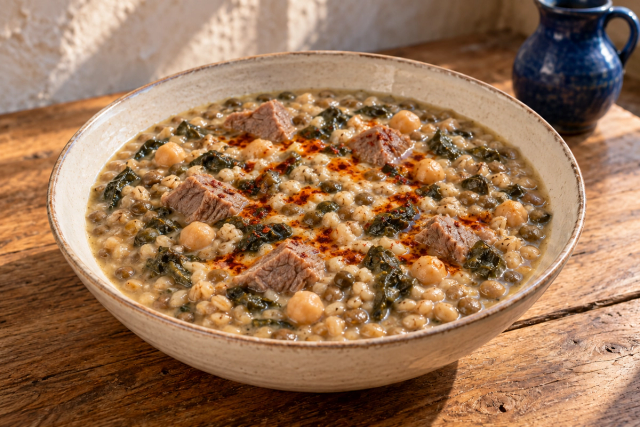
A Van-style pressure-cooker stew of lamb, green lentils, wheat, cooked chickpeas and chard, finished with strained yogurt, garlic and red pepper butter.
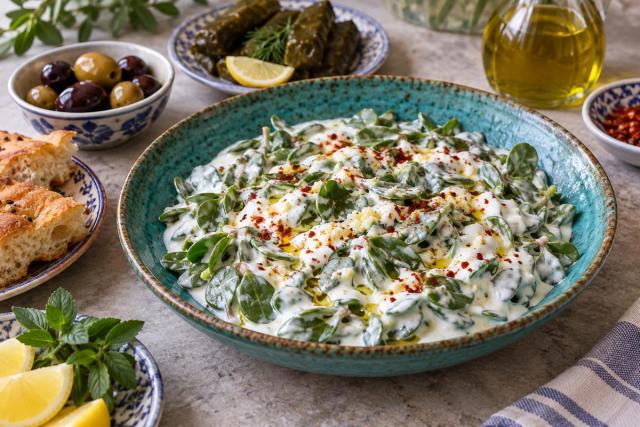
Tender purslane leaves folded into thick garlic yogurt with olive oil and a little red pepper.
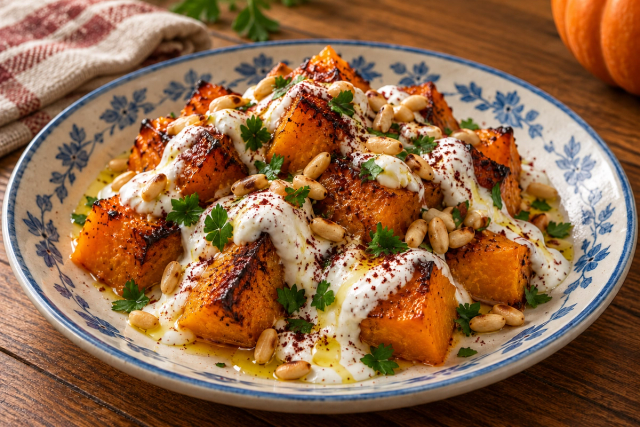
Golden roasted pumpkin with garlic-lemon yogurt, toasted pine nuts, parsley and a light sprinkle of sumac.
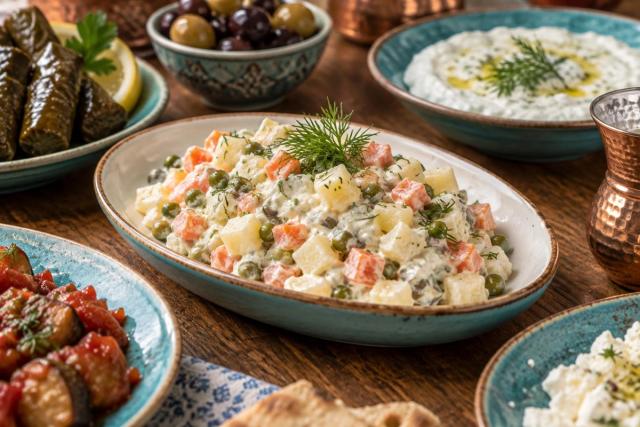
Diced potatoes, carrots, peas and tangy cornichons in a creamy mayonnaise dressing.
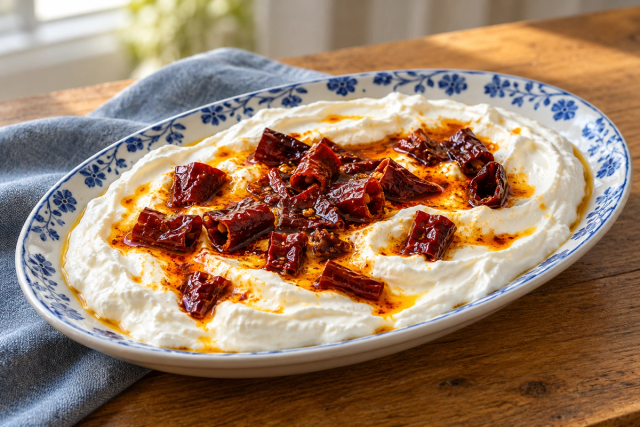
Garlic strained yogurt topped with dried cayenne peppers warmed in butter and olive oil.