Skip to content

The Turkish pantry

Sea bass head and bones

A cleaned head and frame flavor a strained fish stock. They are stock ingredients, not a boneless portion to blend into the finished soup.

Last updated:

Raw European sea bass, Dicentrarchus labrax, head and skeletal frame remaining after filleting, with gills and viscera removed. Attached flesh varies. The bones are removed by straining; the weight of this material is not the edible weight of a fillet or the nutrient content of the stock.
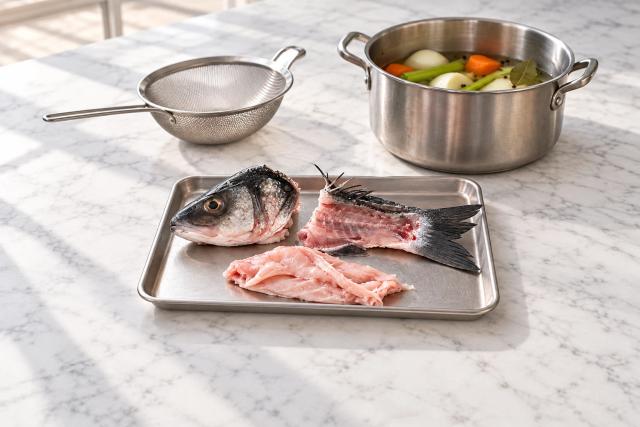
A raw sea-bass head and separated backbone, rib and tail pieces on a metal tray beside a stockpot.

Types & forms

Cleaned head and frame

The raw stock-making form; request removal of gills, viscera and loose scales.

Frozen cleaned frames

Keep species and cleaning information with the pack; freezing does not make old scraps fresh.

Fillets or prepared stock

Fillets are edible portions; prepared stock is an extracted liquid. Neither equals the same weight of raw frames.

What to look for when buying

  • Order fresh stock frames with the fishmonger’s cleaning service, ideally when your fish is filleted. Confirm the species and removal of gills and viscera.
  • Apply the same cold-chain and smell checks as edible fish. A low price or intended long simmer does not make deteriorated scraps suitable.

Prepare & cook

  • Keep raw frames contained and separate from cooked food. Inspect the cleaning; use a suitable pot and follow the recipe for liquid and aromatics.
  • Simmer gently as the fish-stock method directs. Do not transfer a long beef-bone simmering time to a delicate fish stock. Strain through a fine sieve into a clean container; remove all bones and fragments.
  • Never blend the bones into soup. Add the separately measured fillet to the strained stock at the recipe’s stage and cook that fish to 145°F.

Store it well

  • Keep raw fish in a leakproof container at 40°F or below and use within 1–2 days, or freeze promptly. Follow an earlier use-by date. Thaw in the refrigerator, keeping drips away from other food.
  • For vacuum-packed fish labeled to remain frozen until use, remove it from the vacuum bag before refrigerator thawing. Follow the package instructions; a sealed thawing bag is not a substitute for this step.
  • Divide cooked food into shallow containers and refrigerate within 2 hours, or 1 hour above 90°F. Use refrigerated cooked fish, meat or broth within 3–4 days; reheat leftovers to 165°F. Follow a shorter recipe-specific limit where given.

Substitutions depend on the dish

Another named fish’s cleaned frames

Use a stock recipe suited to that species; oily fish can change the flavor markedly. This is a deliberate adaptation.

Ready-made fish stock

Check fish species, salt and other ingredients; use the recipe’s liquid quantity, not the frame weight.

Nutrition

No verified nutrition data is available for this ingredient.

At the Turkish table

The Ministry of Education’s stock teaching material distinguishes stock-making bones from the final soup. Our balık çorbası makes the distinction concrete by listing levrek head and bones separately from the fillet.