


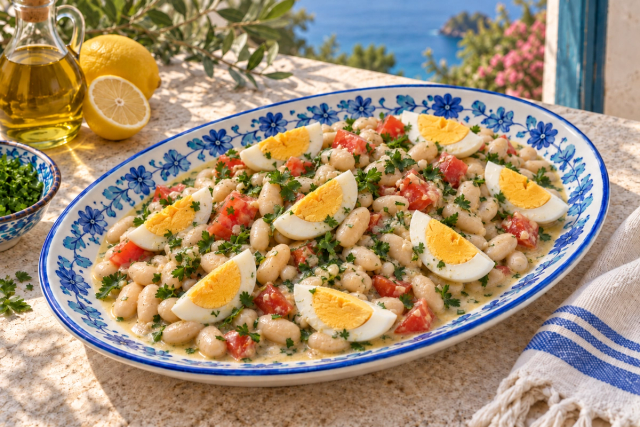
White Bean Salad with Tahini
Cooked white beans with a lemon-tahini dressing, tomato and parsley, topped with hard-boiled eggs. An Antalya-style home adaptation.
The Turkish pantry
Table salt comes in iodized and non-iodized forms, which differ in added iodine.
Last updated:
Fine culinary table salt. Iodized and non-iodized products differ in added iodine; the reference is generic table salt.
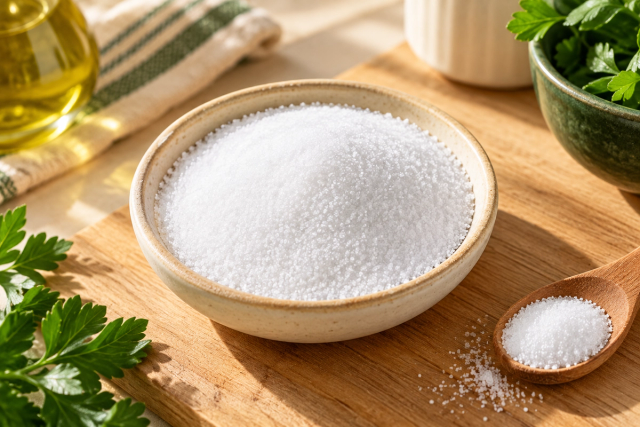
Small crystals measure differently by spoon from many coarse salts.
Different crystal sizes make equal volumes unreliable substitutes.
Use weight where appropriate; do not assume the same spoonful delivers the same quantity.
Salt, table [1]
| Nutrient | Amount |
|---|---|
| Energy | 0 kcal |
| Protein | 0 g |
| Total fat | 0 g |
| Saturated fat | 0 g |
| Carbohydrate | 0 g |
| Dietary fiber | 0 g |
| Total sugars | 0 g |
| Sodium | 38,800 mg |
| Cholesterol | 0 mg |
| Calcium | 24 mg |
| Iron | 0.33 mg |
| Potassium | 8 mg |
| Vitamin D | 0 µg |
Generic table salt. This table does not establish the iodine content of an individual iodized product. Values are rounded for readability; “not reported” does not mean zero. A “<” value is below the source’s measurement limit.
Nutrition values come from the reference source named above. They are published reference values, not our own measurements. Actual products and cooking methods may change the values.
Salt is used across the site’s recipes. “To taste” remains a cooking instruction, not a fixed nutrition measurement.
Cooked white beans with a lemon-tahini dressing, tomato and parsley, topped with hard-boiled eggs. An Antalya-style home adaptation.
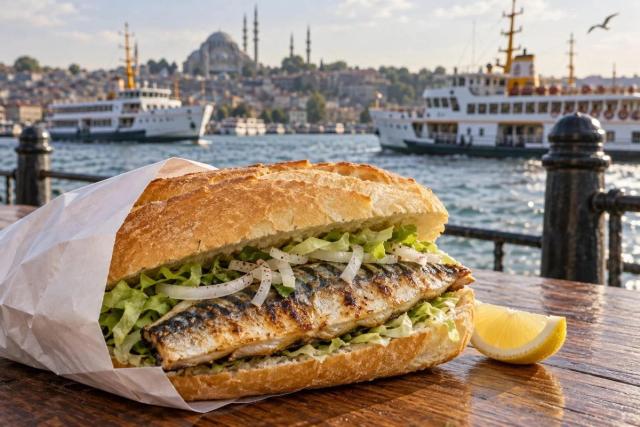
Hot mackerel in crusty bread with crisp lettuce, sliced onion, lemon and optional sumac.
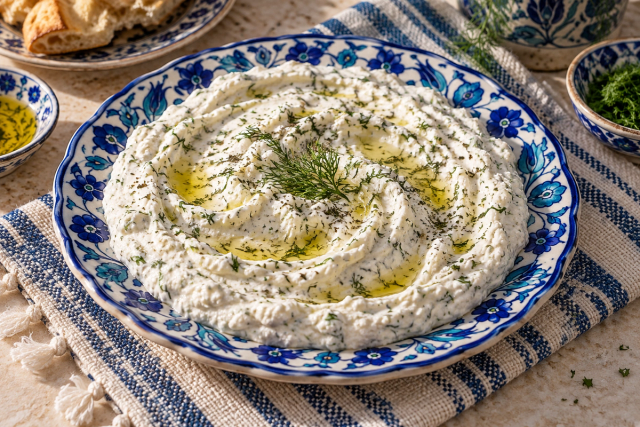
A spoonable strained-yogurt meze with white cheese, mint, dill and garlic.
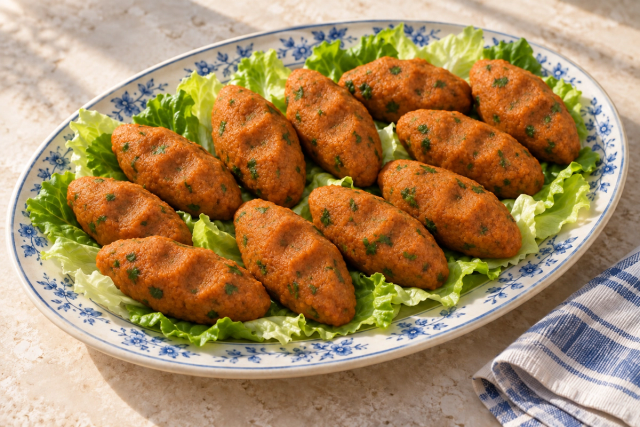
Mercimek köftesi combines soft red lentils, fine bulgur and herbs in hand-shaped patties served on lettuce.
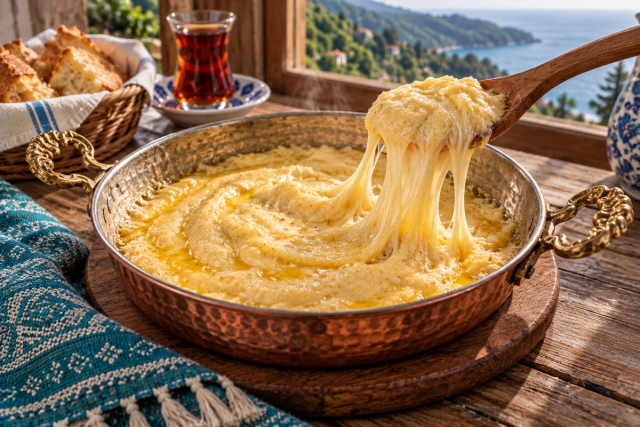
A warm cornmeal, butter and melting-cheese dish inspired by Trabzon cooking.
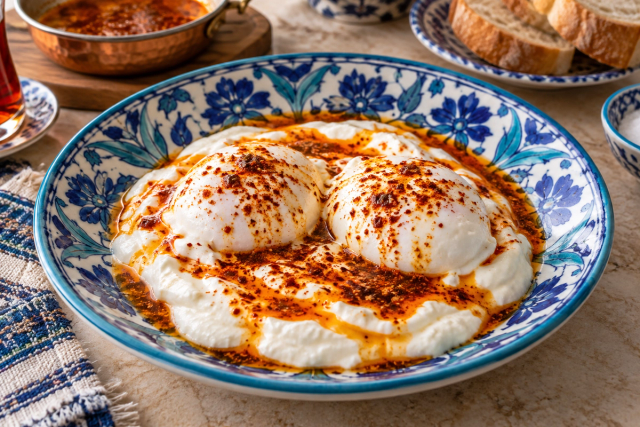
Çılbır pairs warm poached eggs with thick garlic yogurt and a red-pepper butter drizzle.
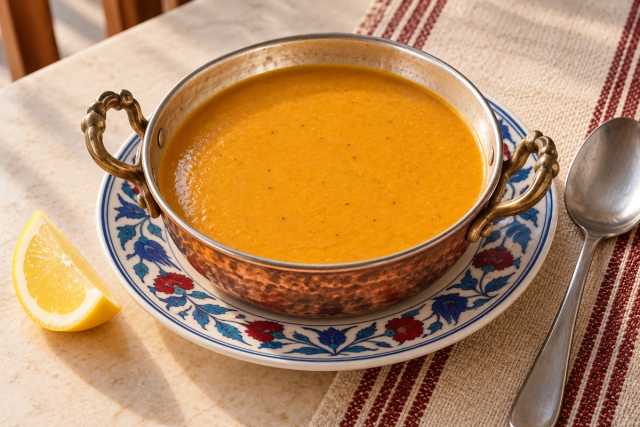
A smooth red lentil soup with onion, carrot and potato, finished with cumin and lemon. This version uses olive oil and water.
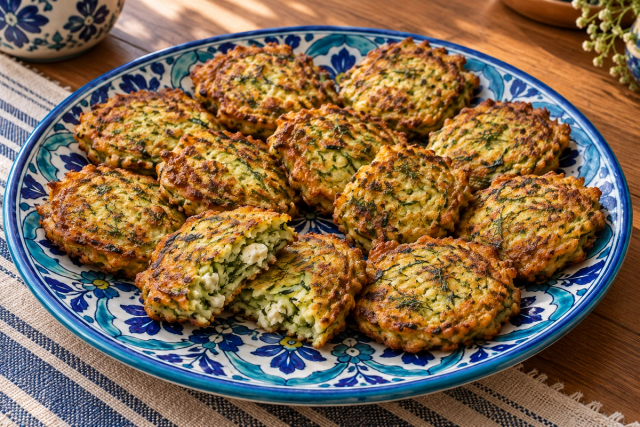
Kabak mücveri turns grated zucchini, white cheese and dill into small, golden pan-fried fritters.
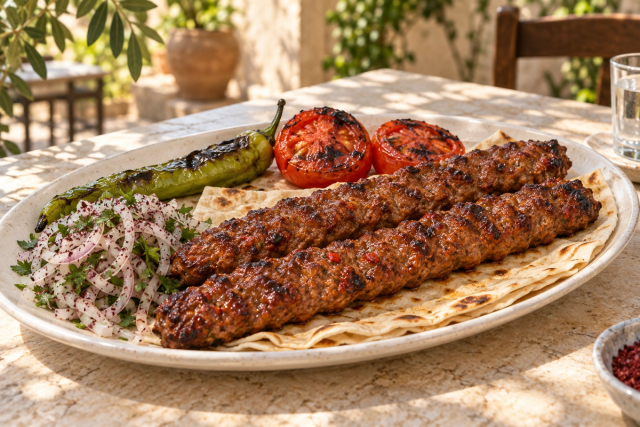
Hand-chopped lamb and tail fat grilled on flat skewers, with warm flatbread, charred vegetables and sumac onions.
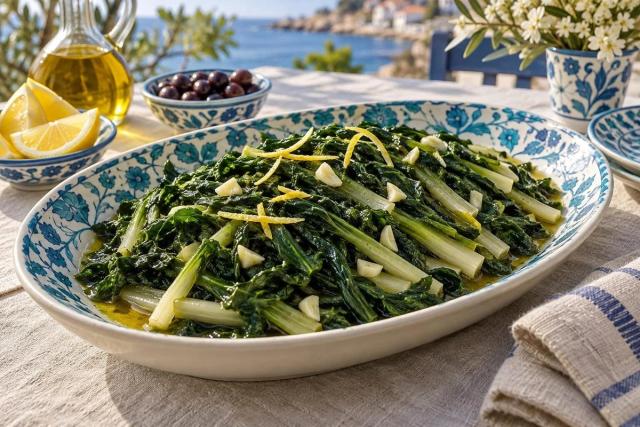
Pleasantly bitter dandelion greens with lemon and olive oil.
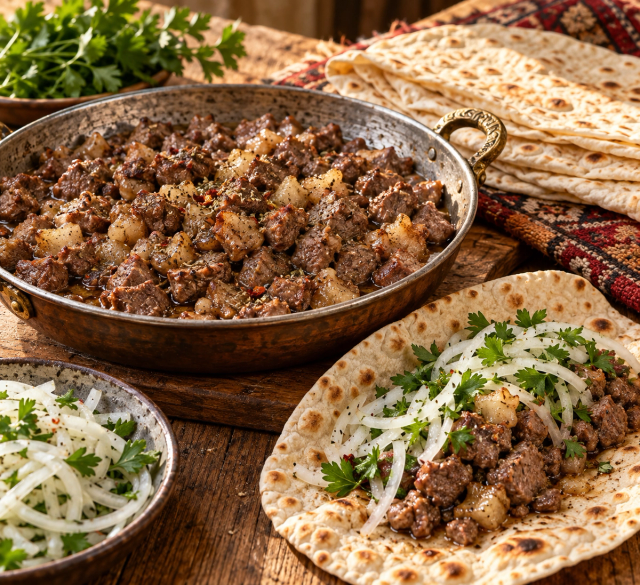
Lamb cooked with sheep tail fat, seasoned with kekik and pepper, served in flatbread with onion and parsley.
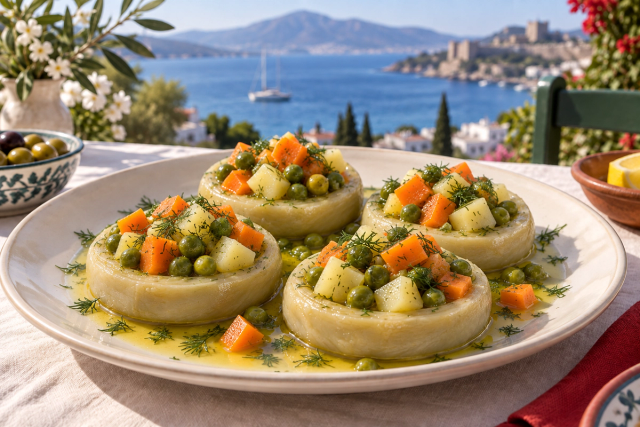
Tender artichoke bottoms filled with carrot, potato and peas in lemon and olive oil.