


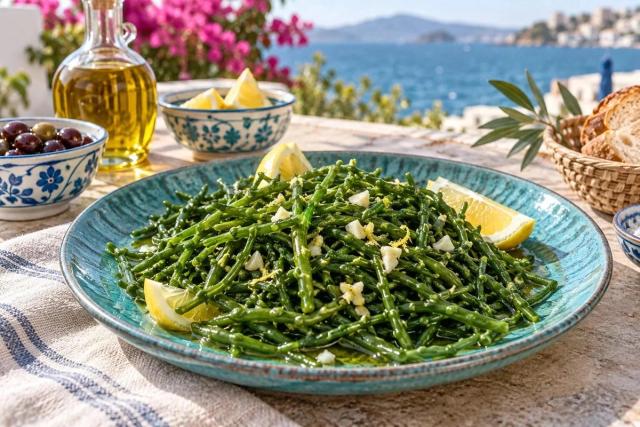
Samphire Salad
Tender samphire shoots dressed simply with lemon, olive oil and garlic.
The Turkish pantry
Naturally salty coastal shoots served in İzmir as salad or meze with olive oil, lemon and garlic. Taste before adding salt.
Last updated:
Edible marsh-type samphire is commonly described as Salicornia spp. Turkish botanical records use more than one species name; do not assume every bunch is Salicornia europaea. Rock samphire, Crithmum maritimum, is a different plant.
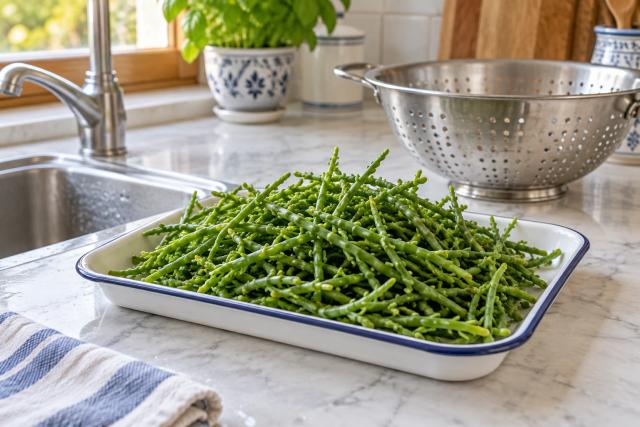
Succulent shoots may contain a woody inner stem.
A different prepared form; follow its label and assess its salt separately.
Can make an olive-oil salad but lack samphire’s saline taste and jointed texture.
Not an exact replacement merely because the English names overlap.
No verified nutrition data is available for this ingredient.
İzmir’s official cultural record specifically documents both salad and meze service.
Tender samphire shoots dressed simply with lemon, olive oil and garlic.