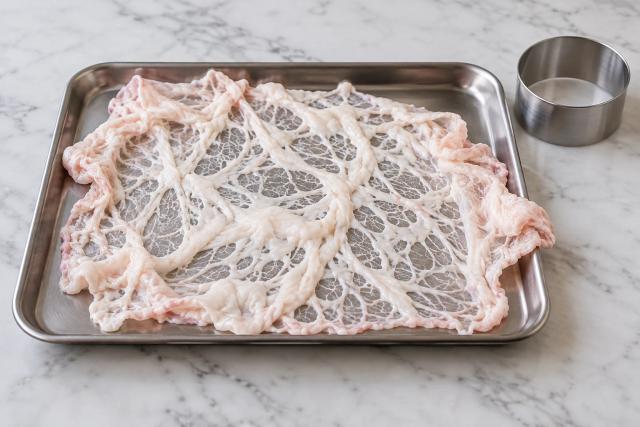
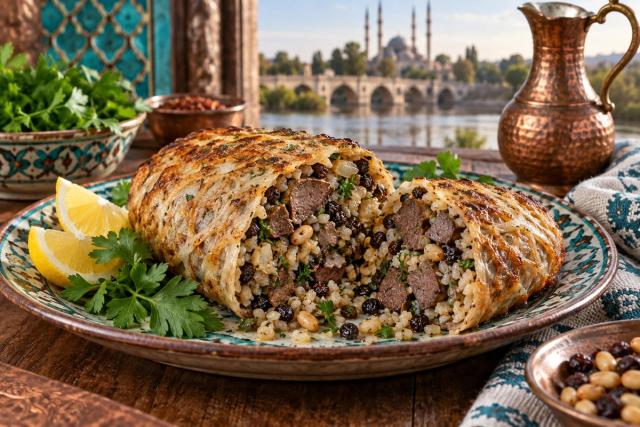
A thin fatty net wraps a liver-and-rice filling, helping hold each parcel together while it cooks. Ask for lamb caul specifically; a lump of animal fat cannot perform the same wrapping job.
Last updated:
Raw, professionally cleaned lamb omental fat: the thin, net-like fatty membrane from the abdominal cavity. Caul is an anatomical form and lamb is the species. Pork caul, kidney suet, tail fat and rendered fat are different ingredients.
Types & forms
Fresh cleaned lamb caul
Delicate sheets with a fatty network, intended to open around a filling.
Frozen cleaned caul
Thaw covered in the refrigerator; confirm lamb and whether the sheets are already cleaned.
Tail fat or suet
Solid fatty tissue rather than a wrapping membrane; not a sheet-for-sheet substitute.
What to look for when buying
Ask a traceable butcher for food-grade, cleaned lamb caul suitable for ciğer sarma. Confirm species instead of assuming that an English caul-fat label means lamb.
Choose cold sheets without sour smell or deteriorated areas, with enough intact netting for the recipe’s parcels. Clarify the prepared amount and storage advice with the butcher.
Prepare & cook
Keep chilled while gently unfolding. If softening is needed, use cold potable water in a contained bowl in the refrigerator; drain carefully. This is handling, not disinfection. Discard the water and do not add it to the dish.
Use clean separate tools and follow the recipe to wrap the prepared filling without tearing the sheet. Avoid running-tap washing that splashes raw-meat contamination around the kitchen.
For a liver-and-rice parcel, check the center reaches 165°F, the conservative endpoint used here for the mixed casserole-style dish. Browning or the caul melting is not a sufficient check of the filling.
Store it well
For home planning, keep raw caul at 40°F or below and use within 1–2 days, or freeze promptly; follow an earlier butcher date. This short window is a conservative application, not a caul-specific shelf-life guarantee.
Keep prepared parcels cold until cooking. Refrigerate cooked parcels promptly in shallow containers within 2 hours, or 1 hour above 90°F; follow the recipe’s shorter cooked-rice storage limit. Reheat leftovers to 165°F.
Substitutions depend on the dish
No caul available
Choose an unwrapped liver-and-rice dish rather than replacing the membrane with a spoonful of fat. The cooking method will differ.
Another species’ caul
May wrap, but changes the ingredient identity and dietary suitability. It must be named explicitly rather than called lamb caul.
Nutrition
No verified nutrition data is available for this ingredient.
At the Turkish table
The official Edirne ciğer sarma entry describes lamb caul enclosing liver, rice and onion and notes a Rumeli connection. This supports the wrapping role and cultural association; its older handling details are not adopted as food-safety instructions here.
Lamb liver and rice with currants, pine nuts and herbs, wrapped in caul fat and baked. Ciğer sarma is associated with Edirne and the wider Thracian/Rumelian repertoire. This herb-and-spice adaptation keeps its lamb liver, rice and caul structure. Buy cleaned food-grade caul from a butcher.