


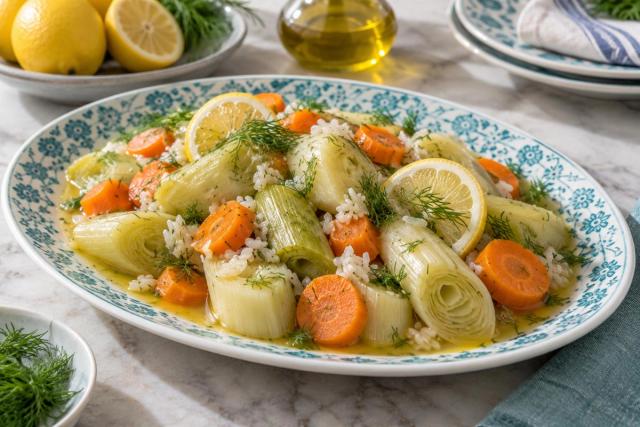
Leeks in Olive Oil
Tender leek pieces, carrot and rice in a gentle lemon and olive-oil cooking liquid.
The Turkish pantry
Choose firm shafts and rinse between the layers before cooking.
Last updated:
A leek has a white lower shaft and broad green leaves. It belongs to the onion family, but is distinct from spring onion or bulb onion.
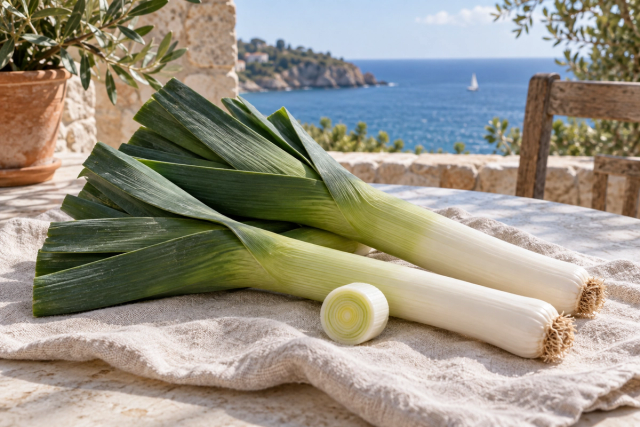
The tender portion used in most leek dishes.
Tougher leaves can flavor broth; remove them when the broth is strained.
Useful in cooked dishes, with a softer thawed texture than fresh leek.
Onion changes the sweetness and texture; it can suit a deliberate soup adaptation.
Spring onion does not reproduce the broad tender pieces in zeytinyağlı pırasa. Choose the correct vegetable.
Raw leek, bulb and lower leaf portion [1]
| Nutrient | Amount |
|---|---|
| Energy | 61 kcal |
| Protein | 1.5 g |
| Total fat | 0.3 g |
| Saturated fat | 0.04 g |
| Carbohydrate | 14.2 g |
| Dietary fiber | 1.8 g |
| Total sugars | 3.9 g |
| Sodium | 20 mg |
| Cholesterol | 0 mg |
| Calcium | 59 mg |
| Iron | 2.1 mg |
| Potassium | 180 mg |
| Vitamin D | 0 µg |
Raw edible-portion reference, not a cooked recipe or a separate analysis of every cultivar. Trimming and cooking change portion weight and composition. Values are rounded for readability; “not reported” does not mean zero. A “<” value is below the source’s measurement limit.
Nutrition values come from the reference source named above. They are published reference values, not our own measurements. Actual products and cooking methods may change the values.
Zeytinyağlı pırasa puts leeks at the center of an olive-oil vegetable dish. The rice and carrot combination belongs to our linked version; household preparations vary.
Tender leek pieces, carrot and rice in a gentle lemon and olive-oil cooking liquid.
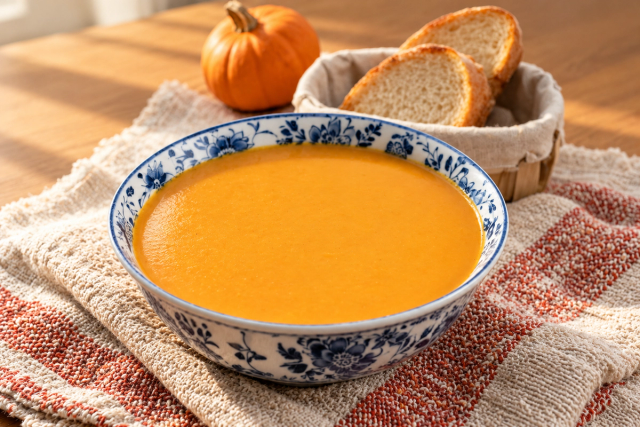
Roasted pumpkin, leek and carrot blended into a smooth soup with cumin, turmeric and a buttery finish.