


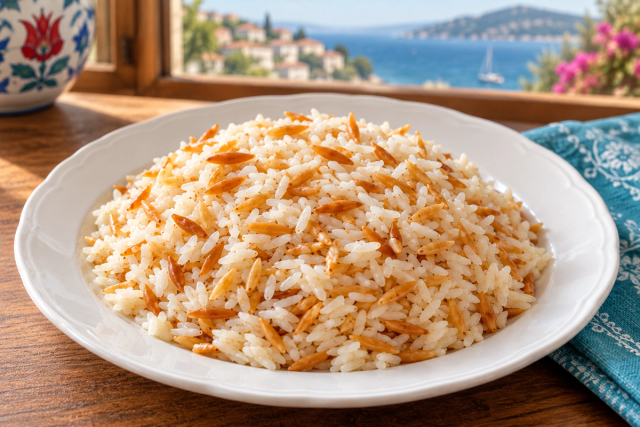
Rice Pilaf with Orzo
Buttery white rice and golden toasted orzo, gently simmered and rested until the grains are separate.
The Turkish pantry
Baldo is a named white rice variety used in pilaf and rice-based soups. Follow the dish’s rinsing, soaking and liquid instructions rather than treating every rice variety as having one water ratio.
Last updated:
Uncooked white Baldo rice. It is not cooked rice, brown rice, or a generic short-grain rice identity.
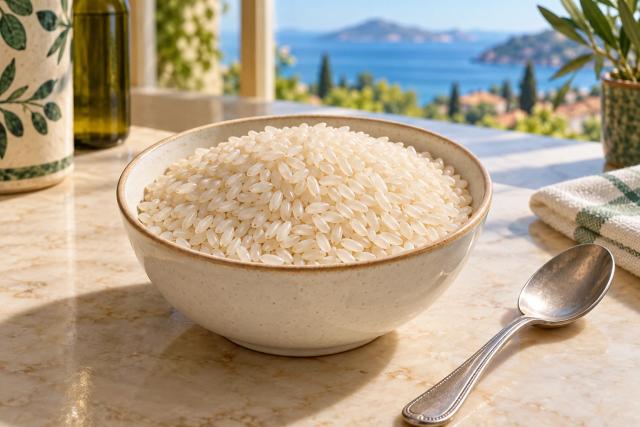
The pantry ingredient measured before cooking; check the variety on the pack.
Has absorbed water and cannot be substituted for the dry amount by weight or volume.
May need a different liquid amount and cooking time; check the intended dish rather than assuming a universal ratio.
Different processing changes cooking requirements, so use an adapted recipe.
No verified nutrition data is available for this ingredient.
The linked recipes use Baldo in pilafs, anchovy rice and yogurt or lamb soups. These varied uses do not turn all Turkish rice into the Baldo variety.
Buttery white rice and golden toasted orzo, gently simmered and rested until the grains are separate.
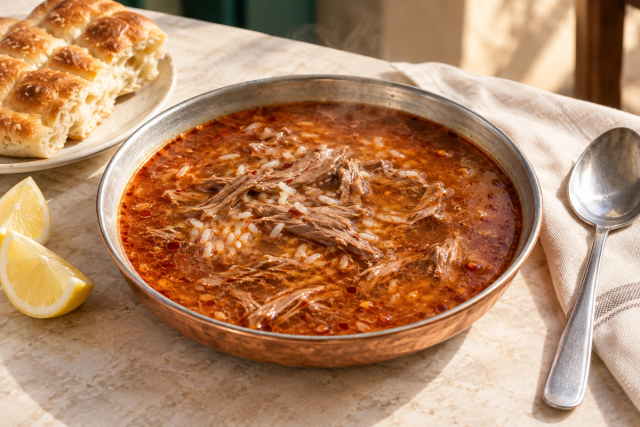
Shredded lamb and rice in a hot garlic-and-red-pepper broth inspired by Gaziantep’s cuisine. The home method uses a regular saucepan and avoids the dramatic flame of specialist beyran service. Longer professional cooking and individual copper-pan assembly give a different result.
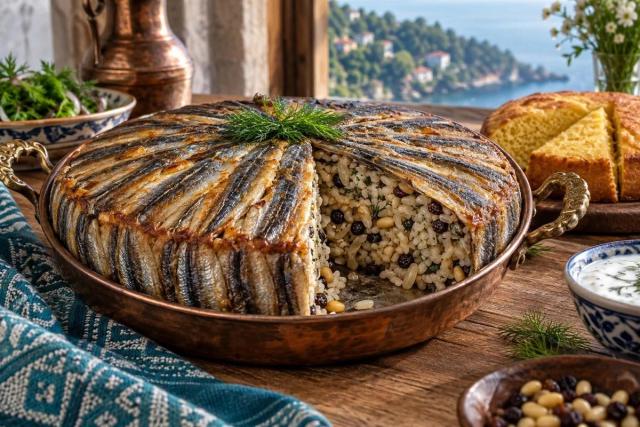
Spiced rice with currants, pine nuts and dill enclosed in a browned anchovy shell.
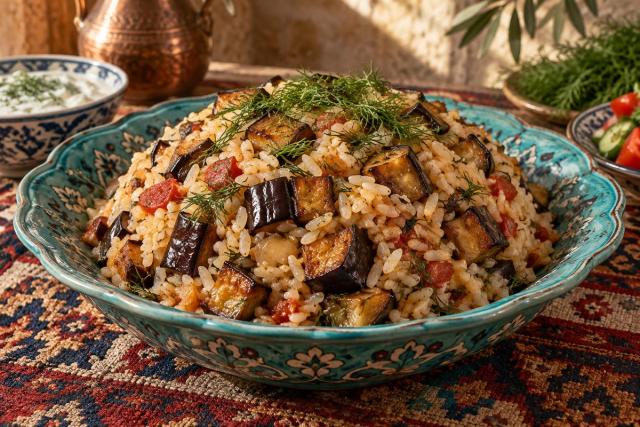
Tender Baldo rice with browned eggplant, tomato, onion, butter and fresh dill.
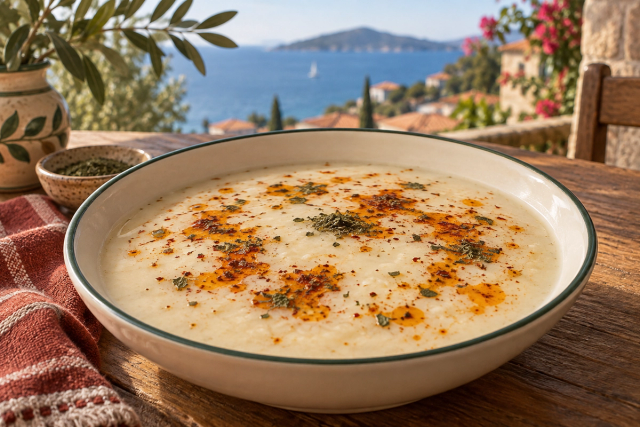
A gently tangy yogurt and rice soup finished with melted butter, dried mint and pul biber.
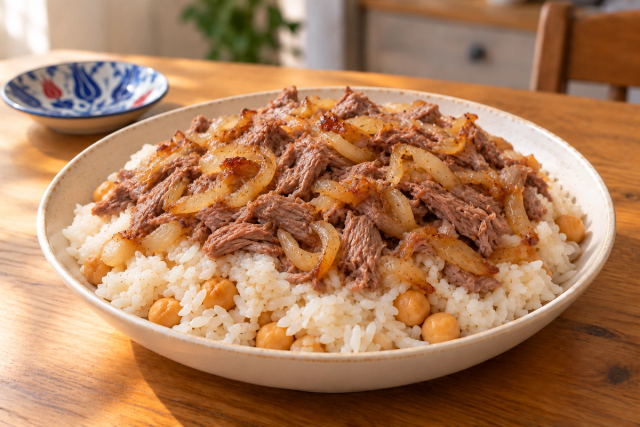
Layers of shredded beef, caramelized onion, rice and chickpeas, cooked in broth and turned onto a platter.