


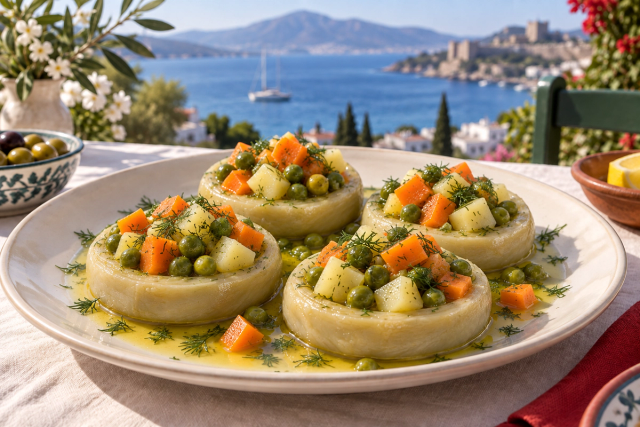
Artichokes in Olive Oil
Tender artichoke bottoms filled with carrot, potato and peas in lemon and olive oil.
The Turkish pantry
The broad, tender base of an artichoke makes a natural cup for peas, carrots and potatoes. Buy fresh trimmed bottoms with the tough leaves and fuzzy choke removed, then cook gently until a knife enters the flesh easily.
Last updated:
Fresh trimmed artichoke bottoms, not whole artichokes, leaf tips or marinated jarred hearts.
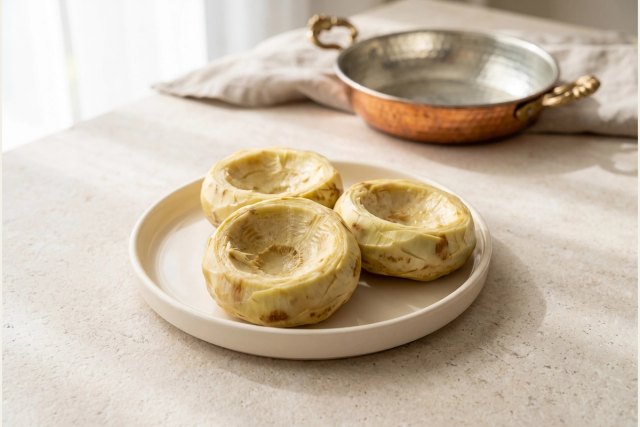
The fleshy base, cleaned of tough leaves and the fuzzy center; check the underside for remaining fibrous patches.
Canned, brined or oil-marinated pieces have different acidity, salt and texture. They are not the fresh ingredient specified here.
Can be useful if a recipe is adapted to the package instructions; their cooking time may differ.
Oil, vinegar and seasoning change the dish, so they are not a neutral replacement.
No verified nutrition data is available for this ingredient.
Zeytinyağlı enginar uses the artichoke base as the center of an olive-oil vegetable dish. The linked recipe is an Aegean-style preparation, not a claim that every artichoke dish has one origin.
Tender artichoke bottoms filled with carrot, potato and peas in lemon and olive oil.